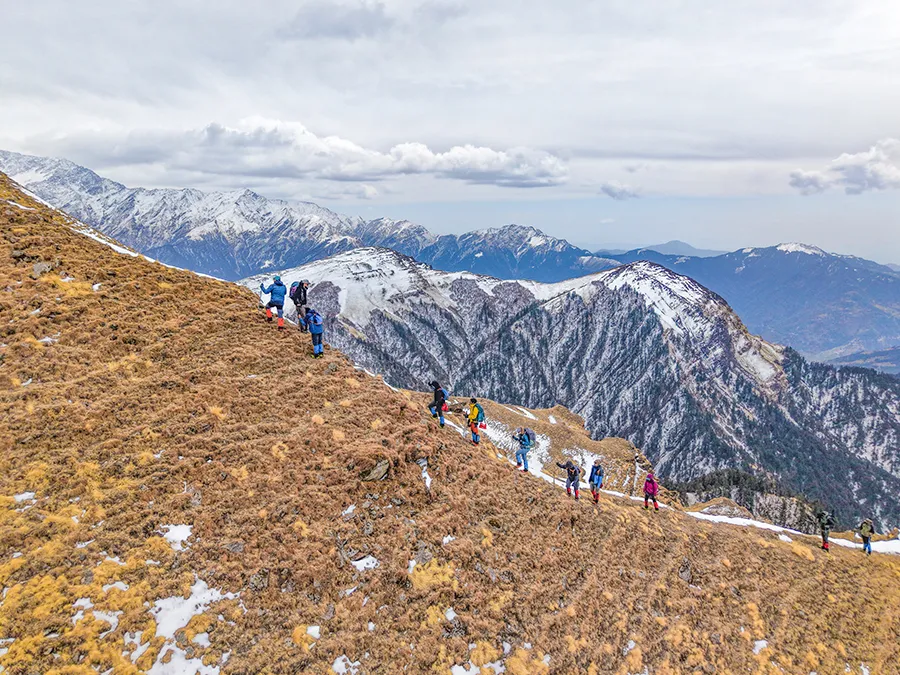
The journey then slowly traverses through forest paths and mountain hamlets and opens onto the magnificent views of Ali Bugyal and Bedni Bugyal. The meadows are open to the sky, giving a good view of the Himalayan peaks such as Mt. Trishul, Nanda Ghunti and Chaukhamba from here, on clear days.
This trek is not a technical high-altitude ascent, there are no glacier crossings and no technical climbing. Despite this, trekkers should still be ready for long days of walking, climbing and steep forest stretches and the unpredictable weather in the Himalayan region.
Trek Information | Details |
Trek Name | Ali Bedni Bugyal Trek |
Region | Garhwal Himalayas, Uttarakhand |
Duration | 6 Days / 5 Nights |
Difficulty | Easy to Moderate |
Trek Distance | 30–35 km |
Maximum Altitude | 12,300 ft |
Major Attraction | Bedni Kund |
Best Time | Spring, summer & post-monsoon |
Why Is the Ali Bedni Bugyal Trek Special?
The Ali Bedni Bugyal Trek is also unique because of its dramatic change of landscape throughout the trek.
The trail starts around the Himalayan villages and the forested slopes and slowly ascends to large alpine meadows. Trekkers traverse from the shade of oak and rhododendron forests to open grasslands in Ali Bugyal and Bedni Bugyal.
The upper parts provide ample views of the surrounding ranges of the Himalayas while the cultural points like Bedni Kund make the trekking experience more enriching.
Major highlights include:
- Walking through oak and rhododendron forests
- Exploring the expansive Ali Bugyal
- Walking across Bedni Bugyal
- Visiting Bedni Kund
- Views of Trishul and Nanda Ghunti
- Himalayan village landscapes
- Seasonal wildflowers
- High-altitude meadow scenery
- Camping in the Garhwal Himalayas
- A mix of forest, village and alpine terrain
Ali Bugyal and Bedni Bugyal
The high-altitude alpine meadows are called bugyals and form a characteristic feature of the Himalayas of Uttarakhand.
Some of the best meadow vistas on this trail are found at Ali Bugyal and Bedni Bugyal. The trail passes through wooded areas and then into wide, grassy open areas. One of the most notable features of the journey is the change in scenery.
Ali Bugyal
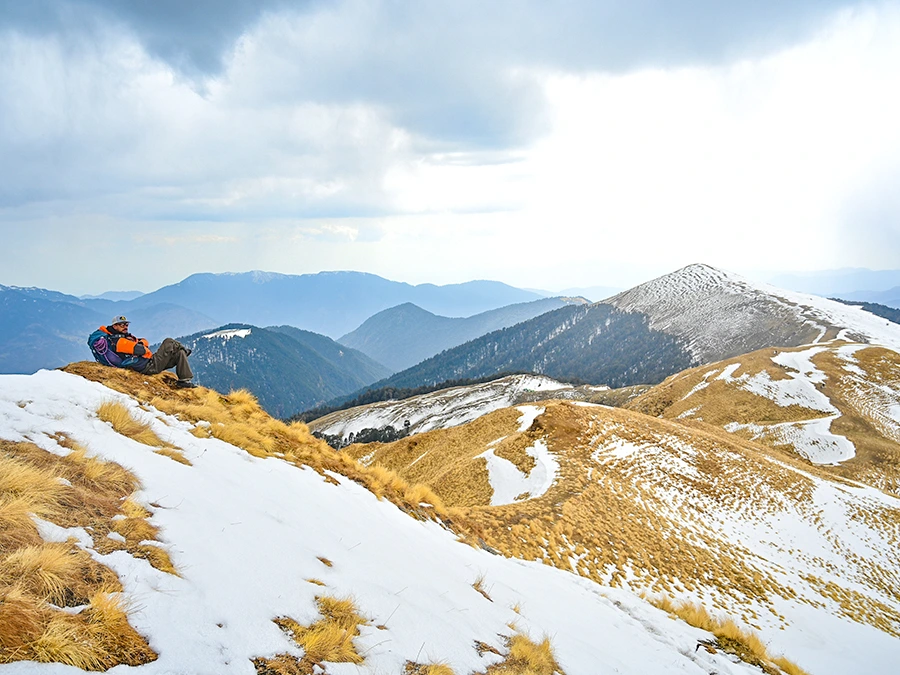
The Ali Bugyal is a large open meadow where trekkers can have a great experience of expansive Himalayan landscapes. The meadow has a fresh look in the greener months and can change colours and surroundings during the seasons.
Bedni Bugyal
The other significant high-altitude meadow along the way is Bedni Bugyal. It is an open setting, affording good views of the mountain scenery.
The views towards Trishul and Nanda Ghunti are especially beautiful during clear days.
Bedni Kund
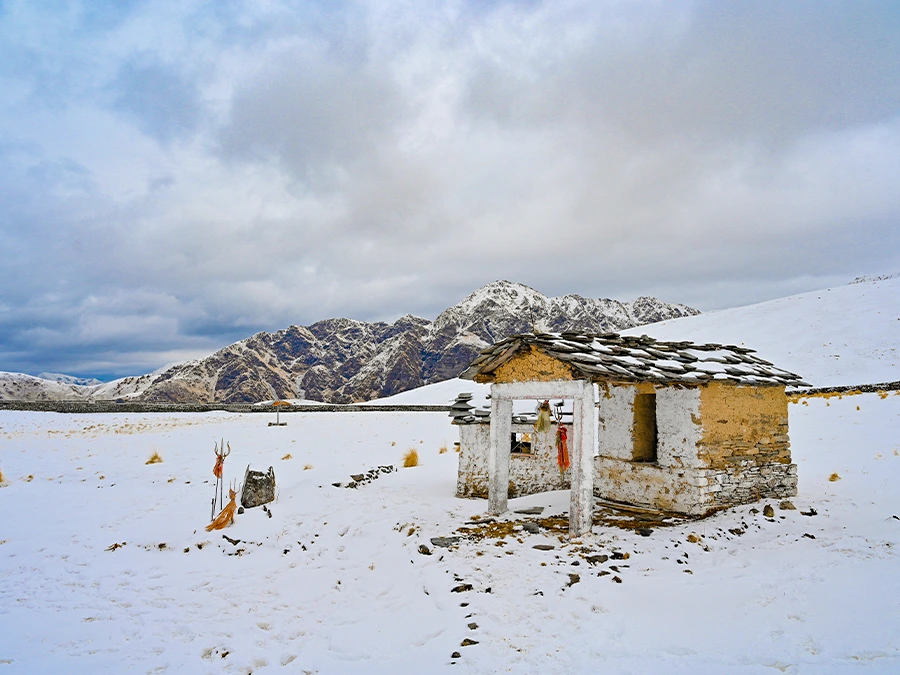
Bedni Kund is a small water body at a high altitude near Bedni Bugyal.
The region is culturally and religiously significant and linked with the local culture and Nanda Devi pilgrimage.
Bedni Kund is an important stop on the trail, with a peaceful and serene atmosphere. It is important for the trekkers to be mindful of the cultural context of the place and not litter or otherwise disrupt the environment.
Forests and Flora on the Trek
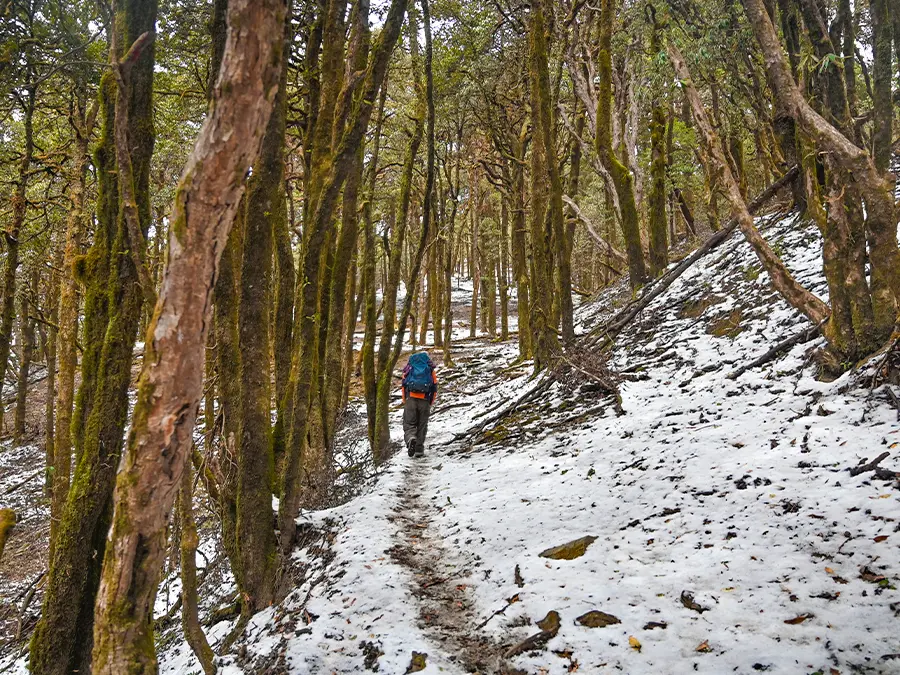
The lower part of Ali Bedni Bugyal Trek is in the forest land where the oak and rhododendron flora are predominant. Rhododendron blooms may provide a color accent in the forest trails in the spring.
The heathland slowly opens up into the high-level heathland as the trail climbs.
The landscape can broadly be experienced as:
Himalayan villages → forest trails → oak & rhododendron forests → alpine meadows → high-altitude mountain landscapes
The trail looks very different in the spring and fall.
Didna Village
Didna village is a traditional village located in the Himalayas, which belongs to the Ali Bedni Bugyal trekking route.
The village provides a chance to experience the more relaxed aspects of mountain rural life, amidst forests and mountains.
The village region has also a contrast to the open meadows found at higher elevations when walking through it.
Respecting local homes, customs and private space as trekkers pass through the village.
Himalayan Peaks Visible From Ali Bedni Bugyal
The most clear vistas of the mountains are from the open meadows.
Trekkers can expect to see:
Trishul
The peak of Trishul is one of the most familiar peaks visible from the meadow region in the Himalayas. It can be especially showy when contrasted to the open grasslands, due to its snow-covered look.
Nanda Ghunti
Another prominent Himalayan peak to associate with the Bedni Bugyal is the Nanda Ghunti. The finest view of the mountains will occur when there are no clouds.
Chaukhamba
Other prominent mountain ranges in the Himalayas which may be seen from the region on clear days are the Chaukhambas. Weather is the only factor influencing the visibility at the mountain. Cloud, rain, fog and snow can drastically impact visibility.
Ali Bedni Bugyal Trek Difficulty
The Ali Bedni Bugyal Trek is generally considered Easy to Moderate.
The difficulty comes less from technical climbing and more from the combination of:
Long walking days
Uphill sections
Uneven mountain trails
Altitude above 12,000 ft
Open meadow walking
Changing weather
Long descents
No technical mountaineering skills are required for the standard trekking route.
However, good physical preparation can make the trek considerably more comfortable.
Who Can Do the Ali Bedni Bugyal Trek?
The trek can be suitable for:
Beginners with reasonable fitness
First-time Himalayan trekkers
Nature lovers
Photography enthusiasts
Travellers interested in alpine meadows
People comfortable with camping
Trekkers looking for a moderate Himalayan adventure
Beginners should still prepare properly because the route includes consecutive trekking days and significant altitude gain.
Who Should Reconsider the Trek?
Extra preparation may be necessary for people who:
- Are not accustomed to prolonged walking
- Have difficulty walking uphill
- Are uncomfortable with camping
- Are not prepared for cold mountain nights
- Have difficulty walking on uneven terrain
- Expect hotel-style comfort throughout the trip
- Have individual health concerns that could affect high-altitude trekking
If you have a medical concern, consult an appropriate healthcare professional before undertaking a high-altitude trek.
Fitness and Preparation
This is a short hike, but can be simplified with a few preparations. For those who are not active on a regular basis, begin to get ready 3-4 weeks prior to the trek.
Cardio: Walking at a brisk pace, jogging, cycling, climbing stairs or hiking regularly.
Strength: squats, lunges, step ups, calf raises and basic core exercises.
Slowly increase your stamina, so you're not overwhelmed by a whole day of walking.
Trek-Specific Preparation
Practice walking on uneven ground and slowly build up on the time spent walking.
The goal is not to just get faster, but to improve leg endurance and strength/stability.
Best Time for Ali Bedni Bugyal Trek
The best time to trek to Ali Bedni Bugyal depends on the kind of Himalayan experience you are looking for.
March to April – Spring
Spring brings fresh greenery and rhododendron blooms to forest sections.
This is a good period for travellers interested in flowers and changing forest landscapes.
May to June – Summer
The meadows are greening up and the overall weather conditions are favorable for trekking.
The period is of great beauty for the open grasslands of Ali Bugyal and Bedni Bugyal.
July to August – Monsoon
Monsoon can bring:
Weather and road conditions should be checked before travelling.
September to October – Post-Monsoon
Post-monsoon conditions can bring clearer skies and improved mountain visibility.
This period is particularly attractive for travellers interested in Himalayan views and photography.
November to February – Winter
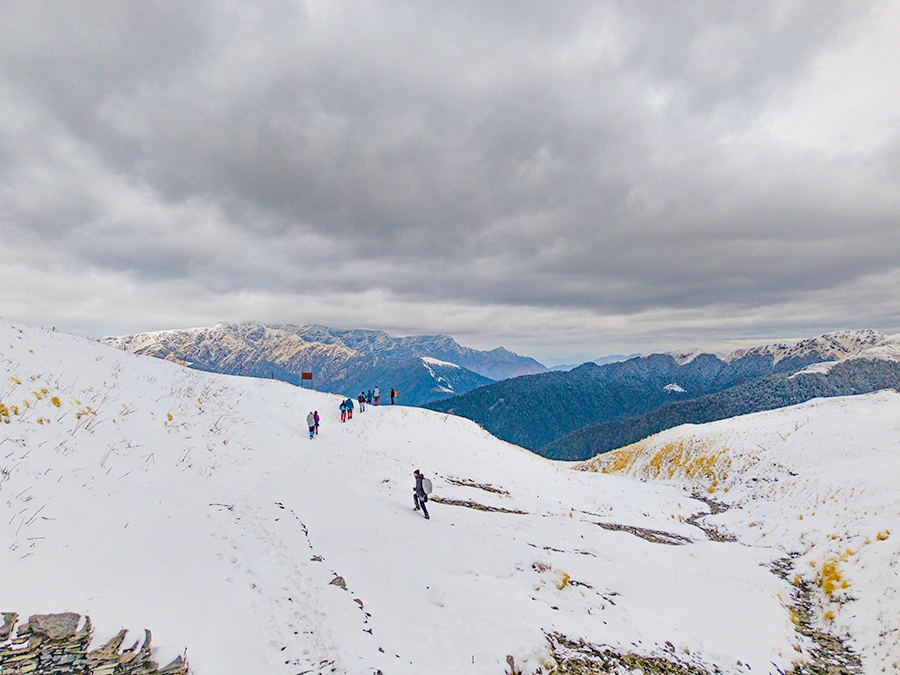
Winter brings colder temperatures and the possibility of snowfall.
Snow conditions can vary considerably from year to year, and route accessibility may change according to local weather.
How to Reach Lohajung
Lohajung is the main base village for the Ali Bedni Bugyal Trek.
By Air
The nearest major airport is Jolly Grant Airport in Dehradun.
From the airport, travellers can continue towards Rishikesh and then travel by road towards Lohajung.
By Train
Travellers can use:
From either location, the onward journey to Lohajung is by road.
By Road
A commonly used route is:
Rishikesh → Devprayag → Srinagar → Rudraprayag → Karnaprayag → Tharali → Dewal → Lohajung
The road journey is long, so travellers should keep sufficient time for mountain-road delays and changing weather conditions.
Safety Tips
Trail conditions and weather can change rapidly in the mountains.
Follow these basic safety practices:
Stay with your trekking group.
Follow the trek leader's instructions.
Do not take unnecessary shortcuts.
Keep yourself hydrated.
Carry adequate sun and rain protection.
Keep essential medicines accessible.
Inform the trek leader if you feel unwell.
Avoid walking alone.
Respect local communities.
Follow environmental guidelines.
Altitude Awareness
The ascent tops 12,000 ft so altitude needs to be considered.
If you are having an unusual headache, feeling dizzy, feeling sick, very tired or having trouble breathing, tell your trek leader right away.
Avoid going on an extended trek, just to finish the course because symptoms are getting worse.
Obey trek leader and seek medical help if needed.
Responsible Trekking
The state of Uttarakhand has alpine meadows and forests which are sensitive landscapes.
While trekking:
Carry your waste back with you.
Avoid unnecessary plastic.
Do not pick flowers.
Do not damage vegetation.
Stay on established trails.
Do not disturb wildlife.
Avoid loud music.
Respect local traditions.
Keep campsites clean.
Use designated toilet facilities.
Ali and Bedni Bugyal are unique in many ways, and responsible trekking helps conserve those landscapes.
Ready to Explore Ali & Bedni Bugyal?
Walk through Himalayan forests, explore the vast meadows of Ali and Bedni Bugyal, visit Bedni Kund and experience spectacular mountain landscapes surrounded by the Garhwal Himalayas.
Plan your Ali Bedni Bugyal Trek and get ready for an unforgettable Himalayan meadow adventure.



 Back to Treks