


 Back to Treks
Chadar Trek
Experience the thrill of trekking over a frozen river surrounded by the majestic Himalayas
Online booking disabled (no dates added)
Highlights
Walking over the frozen Zanskar River in winter, a truly unique experience.
Encounter frozen waterfalls, ice bridges, and turquoise pools.
Witness life in Zanskari villages and local winter culture.
Photography opportunities at every step: ice formations, cliffs, and Himalayan panoramas.
Sub-zero winter camping with expert guidance and safety measures.
Trek under clear skies with sunrise and sunset over icy landscapes.
Guided by high-altitude trained experts, ensuring safety and comfort.
About the Trek
One of the most unique winter trekking experiences in India, the Chadar Trek takes trekkers across parts of the frozen Zanskar River in Ladakh in the coldest months of winter. The hike is not along a traditional mountain route, but along the frozen river through the dramatic scenery of the Zanskar Gorge.
The journey takes you through the harshly cold winter weather, frozen landscapes, towering canyon walls, frozen waterfalls, ice formations and occasional moments of traditional Zanskari life in the remote Zanskar Valley, Ladakh. The term “Chadar” is used for the sheet or blanket of ice that is created over the river Zanskar during winter.
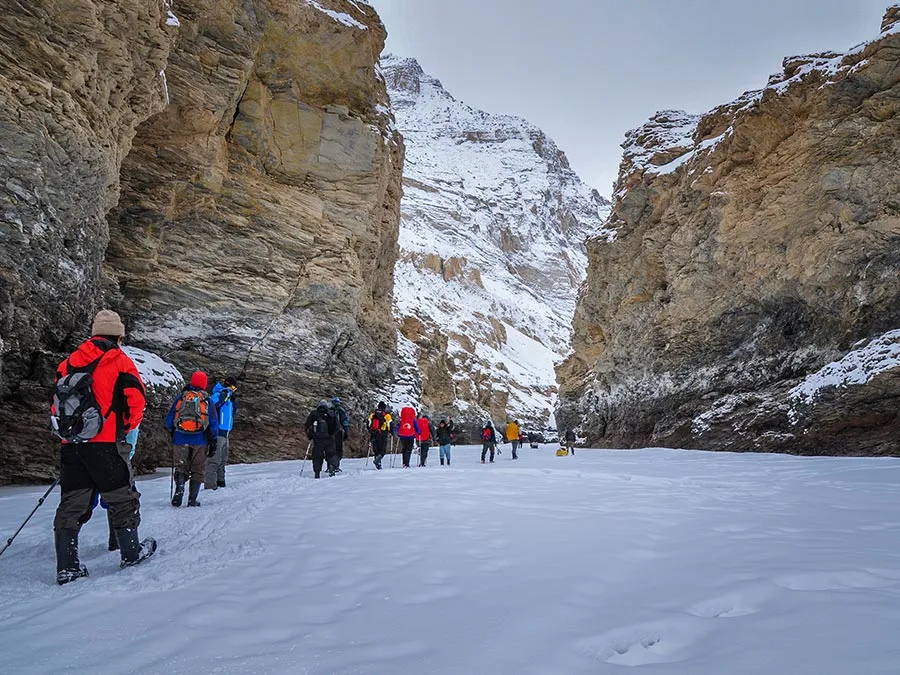
The hike starts from Leh, where trekkers get acclimatised, and then head towards the river. The terrain on the Chadar is completely different. A frozen river flows between high mountain walls, and the frozen waterfalls, as well as the different kinds of ice and snow covering part of the mountain slopes, provide a constantly varying trail.
Although the terrain generally is more predictable on treks of the Himalayas, the Chadar Trek demands adaptations of the trekkers to changing ice and river conditions. The texture of some sections can be smooth and hard, and others can be uneven, rough or slippery. The river will also have to be negotiated by trekkers over some rocky river bank sections, depending on the river's conditions.
Quick Facts About Chadar Trek
Trek Information | Details |
Trek Name | Chadar Trek |
Region | Zanskar Valley, Ladakh |
Starting / Reporting Point | Leh |
Duration | 8 Days / 7 Nights |
Approx. Distance | 105 km |
Maximum Altitude | 12,139 ft |
Difficulty | Moderate to Challenging |
Why Is the Chadar Trek So Unique?
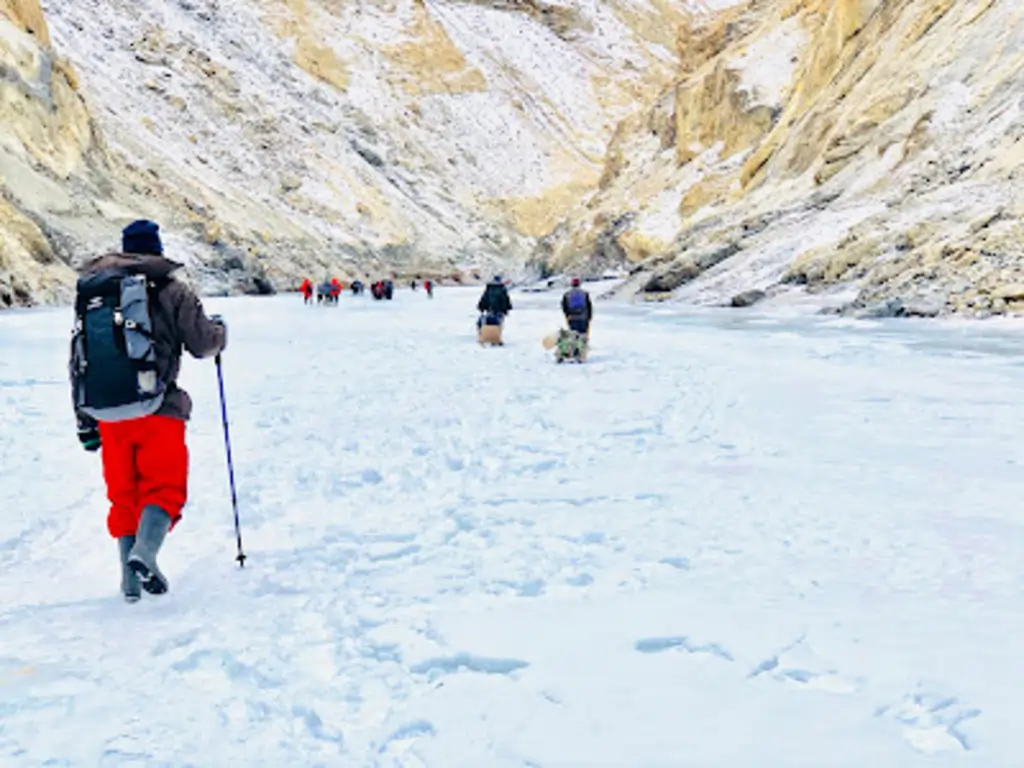
The Chadar Trek is also unique from the majority of other treks in the Himalayas as the path itself is formed by the winter weather. In place of a fixed mountain path, the trekkers wander over the different parts of the frozen river and, if necessary, along the riverbank.
The experience combines:
Frozen section of Zanskar River
The dramatic landscapes of the Zanskar Gorge are breathtaking.
Frozen waterfalls and ice formations.
Extreme winter temperatures
Snow-covered cliffs and mountains
Remote Himalayan surroundings
Traditional Zanskari winter life
The surface is constantly changing, so it's important to be prepared both physically and mentally for the journey.
The Frozen Zanskar River
The most unique thing about the Chadar Trek is the frozen Zanskar river.
In winter, when temperatures are very low, parts of the river freeze and create a layer of ice which stretches as a sheet across the river called the Chadar. The river is not completely frozen along the way, though.
The thickness and stability of the ice may vary due to temperature, sun exposure, snowfall and water flow. The important point to remember is that trekkers should never take anything for granted about the river's conditions: not on any given section of the river, anyway.
One day on the Chadar could be:
Walking on compacted ice, as when the ice is firm and compacted.
Walking across irregular ice surfaces
Walking beside the river
Transiting over sections of the road that are rocky along the riverbank
Narrow Gorge Sections
The movement of moving across areas of textural ice.
Riding the safest route chosen by the trek team
One of the main reasons this trek is interesting is the changing nature of the frozen river.
Frozen Waterfalls and Ice Formations
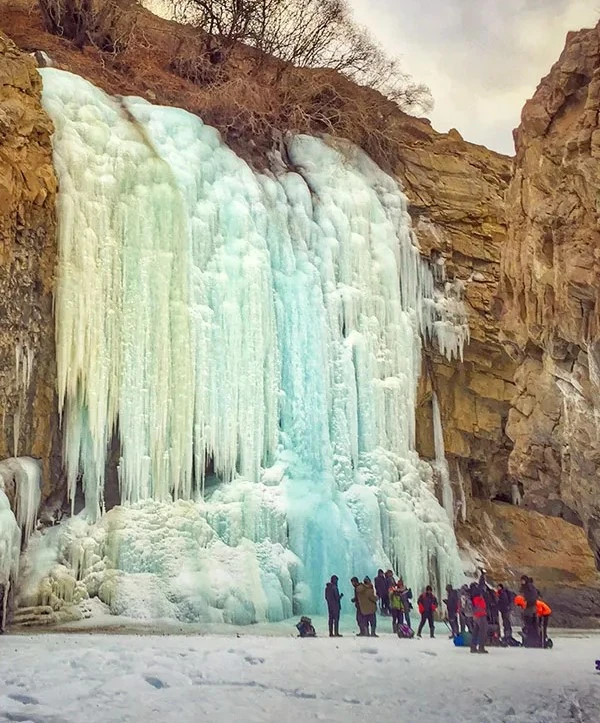
One of the most amazing things to see on the Chadar treasure trail is the frozen waterfalls.
During winter months the water cascading over the surrounding cliffs can freeze creating vertical walls and hanging ice formations. These formative are white, blue or translucent depending on temperature, sun and humidity.
The frozen waterfalls contrast with the dark rock walls of the Zanskar Gorge providing some of the most unusual views along the route.
You may encounter:
Frozen waterfalls
Frozen streams
Ice curtains
Turquoise ice
Frozen pools
Snow-covered rocks
Icicles along cliff walls
Natural ice formations
These formations are natural and may alter based on the weather and temperature.
Zanskar Gorge Landscape
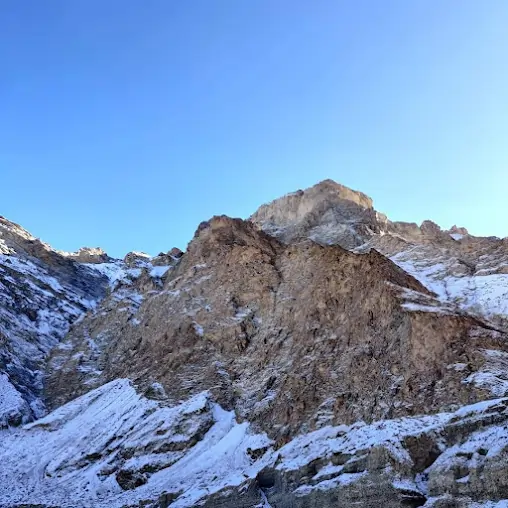
The route to Chadar winds through narrow stretches of the Zanskar Valley with steep rock walls on both sides of the frozen river.
The Chadar landscape is quite rugged, with ice and the shadow of winter dominating the green valleys and forested landscapes seen on many Himalayan treks.
The scenery includes:
Rugged brown and red cliffs
Frozen river surfaces
Snow-covered mountain slopes
Narrow gorges
Frozen waterfalls
Open areas of frozen rivers.
Winter shadows between the cliffs,
Life in Zanskar During Winter
Along the way, visitors may see locals navigating their way through the winter wonderland and get a first-hand look at life in one of the coldest inhabited parts of the Himalayas.
The cultural component is another element to the journey. As well as a trek through ice and mountains, it is an opportunity to learn about how communities have adapted to extreme winter conditions.
Respect the local customs, homes, the religious practices and private spaces throughout the journey.
Why Choose the Chadar Trek?
1. Walk Across a Frozen River
The Chadar Trek is quite a different trek from the conventional Himalayan trek. The trekker can cross the frozen Zanskar River on appropriate parts under the towering mountain walls.
2. Experience Extreme Winter in Ladakh
It is a trek in one of the coldest parts of the Ladakh winter. It's a challenging winter adventure thanks to the frozen rivers, icy cliffs, snow-covered mountains and sub-freezing temperatures.
3. Explore the Zanskar Gorge
One of the most spectacular sections of the trail is the gorge itself. The river is flanked by high cliffs which dominate both sides, and leave narrow corridors and wider openings through the trail.
4. See Frozen Waterfalls
If it gets cold enough, waterfalls and streams can freeze into amazing vertical shapes down the gorge.
5. Experience a Remote Himalayan Landscape
The journey takes the traveller away from the developed and popular tourist spots of Ladakh and into a remote and remote winter environment with limited connectivity, extreme cold and rugged mountain terrain.
6. Experience Zanskari Culture
On the walk, participants will see typical winter life in the Zanskar area and learn how people in the valley live in harmony with the natural environment.
Best Time for Chadar Trek
Chadar Trek is best in January and February when the winter conditions are right for the right parts of the Zanskar to freeze.
However, the exact trekking window should not be looked on as a permanent window each year. Natural ice formation is essential for the Chadar and it can be influenced by temperature, snowfall, river flow and other winter conditions.
January
January generally falls within the coldest part of the Chadar season.
Possible conditions include:
Extensive ice formations
Frozen waterfalls
Snow-covered cliffs
Very cold mornings and nights
Clear winter skies
Dramatic ice textures
February
February can offer good winter conditions, but the specific weather and ice conditions for that season will determine the river's condition.
Seasonal changes in weather conditions can also impact ice conditions later in the winter. It is therefore the duty of the trek team and local authorities to assess the route and provide instructions to trekkers and they should be followed.
Chadar Trek Temperature
Chadar Trek is done in very cold winter weather.
The approximate temperatures for the trek are:
Day: -5°C to -15°C
Night: -15°C to -25°C
Actual temperatures can vary depending on altitude, campsite, wind and weather conditions.
Trekkers are thus advised to avoid taking any chances and be ready to experience extended periods of sub-zero temperatures, especially early in the morning, evening and on nights.
Correct clothing, appropriate footwear, and gloves, head and winter gear are key items.
Chadar Trek Difficulty Level
Difficulty: Moderate to Challenging
The Chadar Trek requires good physical fitness, stamina and the ability to walk for several hours in extremely cold conditions.
There are two difficulties:
Frozen and slippery surfaces
Extreme cold
Long trekking days
Changing ice conditions
Rocky riverbanks
Uneven terrain
Limited access to facilities
High-altitude environment
Winter camping
The information available at present says it is a fit and stamina event and winter conditions and changing terrain are a key factor in the challenge.
Fitness Preparation for Chadar Trek
Start preparing approximately 6–8 weeks before the trek.
Cardio: Walking at a brisk pace, jogging, cycling, climbing stairs or hiking regularly.
Strength: squats, lunges, step ups, calf raises and basic core exercises.
Strong legs can help with balance and stability on uneven and slippery surfaces.
Walking Practice
Special attention should be paid to the use of regular walking for Chadar preparation. Slowly build up your amount of walking and add stairs or inclines if possible. The aim is not to walk faster – but to be able to walk longer.
How to Reach Chadar Trek
By Air
Leh is easily accessible in this manner, by air, for the Chadar Trek.
By Train
Chadar Trek Safety Guidelines
1. Follow the Trek Leader
Ice conditions can change quickly. Always follow instructions regarding:
Route
Walking technique
Pace
Rest breaks
Ice crossings
Weather
Emergency procedures
2. Never Walk on Unchecked Ice
3. Stay Warm
Head
Hands
Feet
Face
properly protected.
4. Stay Hydrated
Cold weather can reduce the sensation of thirst, but hydration remains important. Drink water regularly according to your trek team's guidance.
5. Protect Your Electronics
6. Watch Your Footing
7. Be Prepared for Route Changes
The itinerary may need to change because of:
Ice formation
Temperature
Snowfall
River conditions
Weather
Local administration instructions
A route change can be necessary for responsible winter trekking.
Ready to Experience the Chadar Trek?
Step onto the frozen Zanskar River and experience one of Ladakh’s most extraordinary winter landscapes. Walk through dramatic gorges, witness frozen waterfalls and ice formations, and discover the unique winter environment of the Zanskar Valley.
The Chadar Trek requires proper preparation, good fitness and the right winter gear. Check the latest trek dates, route conditions and package details before planning your journey.
Plan Your Chadar Trek Adventure
Chadar Trek Complete Information
Expand each section below to see all the details you need to prepare.
Inclusions
What's Included
- All meals during the trek (vegetarian)
- Camping equipment including sleeping bags rated for extreme cold
- Tents and mattresses
- First aid and medical kit with oxygen cylinders
- Permits and entry fees
- Transportation from Leh to trek start/end point
- Gaiters and micro spikes for ice walking
- Basic mountaineering equipment
- Emergency evacuation arrangements
Exclusions
What's Not Included
- 5% GST
- Flights to and from Leh
- Accommodation in Leh before and after trek
- Personal trekking gear and clothing
- Travel insurance
- Meals in Leh
- Any costs arising due to unforeseen circumstances
- Porter charges for personal belongings
- Anything not mentioned in inclusions
Photo Gallery
5 Photos