

Himtrek Logo
Himtrek Logo

Main

Upcoming TreksBlogs & Guides

Choose a Trek

By RegionBy MonthEasy TreksModerate TreksDifficult Treks

Group & More

Rent a GearShopHimtrek StaysHimtrek StaysEvents

Company

About UsCareersContact Us
Login / Signup
Home/Blog/Kashmir Great Lakes Trek: Booking Online, Best Time, Cost, Route & Complete Guide
Trekking GuidesKashmir Great Lakes Trek (KGL)

Kashmir Great Lakes Trek: Booking Online, Best Time, Cost, Route & Complete Guide

A
Anuj Vishwakarma
Trek Expert
2026-07-28
12 min read
Kashmir Great Lakes Trek: Booking Online, Best Time, Cost, Route & Complete Guide
"Book Kashmir Great Lakes Trek online with permits, July-September batches, and guided trekking to Vishansar, Krishansar, and Gangabal Lakes."

There are some treks where the mountains stay in front of you for most of the journey.
Kashmir Great Lakes is not one of them.
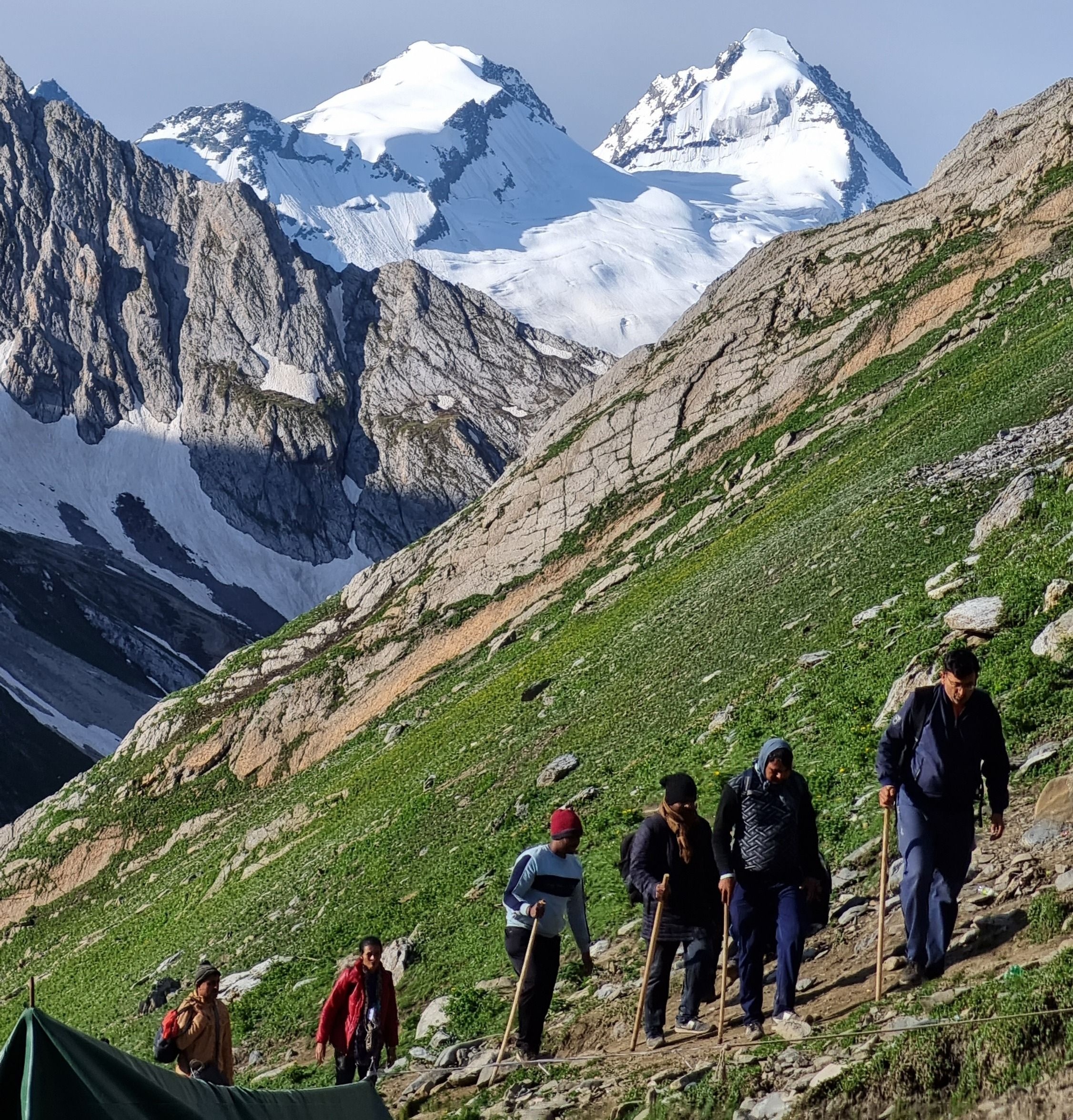
Here, the scenery keeps changing. A green meadow opens into a wide valley. A narrow trail climbs towards a mountain pass. Snow-covered peaks appear on the horizon. And then, almost unexpectedly, you find a high-altitude lake sitting quietly between the mountains.

Vishansar, Krishansar, Gadsar, Satsar, Gangbal, and Nundkol are some of the highlights along the classic route. But the lakes are only one part of the experience. The real charm of the Kashmir Great Lakes Trek comes from walking through Kashmir's changing landscapes, from open meadows and alpine valleys to high mountain passes.

If you are planning to book the Kashmir Great Lakes Trek, this guide will help you understand the best time to visit, the route, the difficulty, the cost, what a typical package includes, and what you can expect from the journey.

Kashmir Great Lakes Trek at a Glance

Detail

Information

Location

Kashmir, Jammu & Kashmir

Trek Region

Sonamarg to Naranag

Trek Duration

Around 6 to 7 days

Distance

Approximately 65 to 75 km

Difficulty

Moderate to Difficult

Highest Point

Around 13,700 ft

Best Season

July to mid-September

Major Highlights

Vishansar,Krishansar,Gadsar,Satsar,Gangbal, and Nundkol

The exact distance, route, and altitude can vary slightly depending on the route followed by the trekking operator.

Best Time to Visit Kashmir: Great Lakes Trek
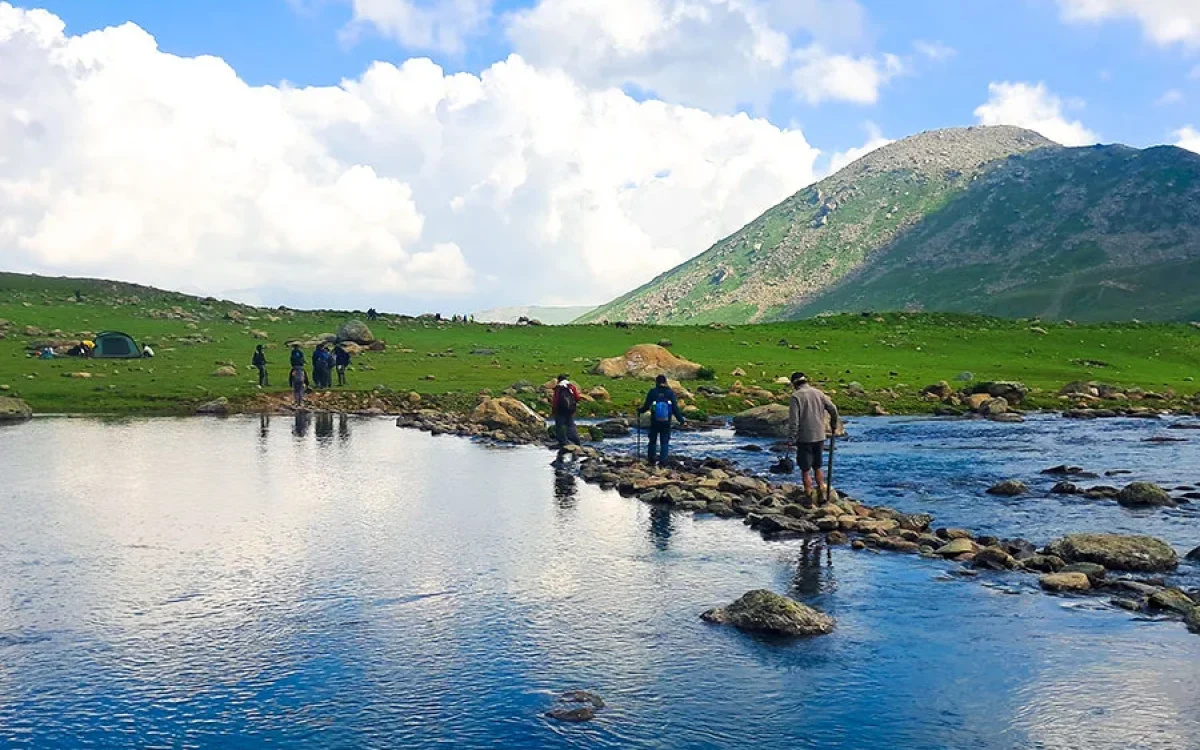
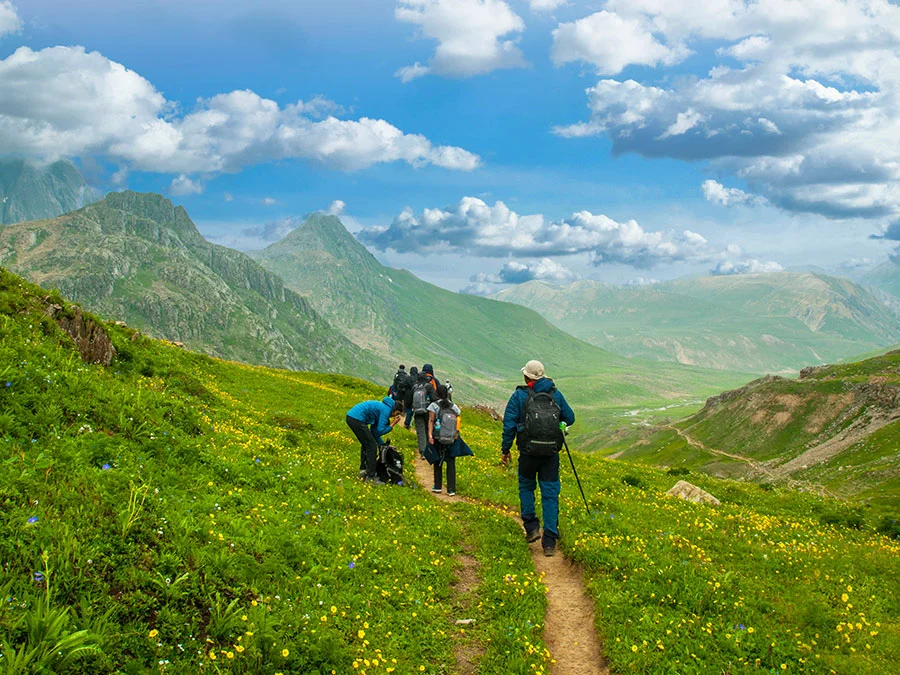
The main trekking season for the Kashmir Great Lakes Trek is July to mid-September.
This is when the higher sections of the trail become accessible and Kashmir's famous meadows are at their most beautiful.
Each part of the season has something different to offer.

July: Fresh Meadows and Mountain Greenery

Trek detail image

July marks the beginning of the main trekking season.
The meadows become fresh and green, while patches of snow can still be seen around some of the higher sections. Water streams are active, and the landscape has that fresh Himalayan look that makes Kashmir so special.
This is a great period if you want to see the trail transition from the remains of winter into its lush summer landscape.
The weather can change during the day, so layers and proper rain protection are useful.

August: Wildflowers and Lush Landscapes
August is one of the most attractive months for the Kashmir Great Lakes Trek.
The meadows are covered in shades of green, and wildflowers add color to the trail. The combination of open grasslands, blue lakes, and surrounding mountains creates some of the most memorable scenery of the trek.
For many trekkers, August offers the classic Kashmir Great Lakes experience they have seen in photographs.

September: Clear Mountain Views
September brings a slightly different character to the trail.
The skies can become clearer, and mountain visibility is often excellent. The landscape slowly begins moving towards autumn, while the meadows still retain much of their summer beauty.
If your priority is mountain views and crisp Himalayan scenery, the first half of September can be an excellent time to visit.

What Makes the Kashmir Great Lakes Trek Special?
The name itself gives away one part of the experience.
You get to see several high-altitude lakes during the trek.
But what makes the journey memorable is the way these lakes appear along the changing landscape.
One moment you are walking through a huge open meadow.
A few hours later, the trail climbs towards a high pass.
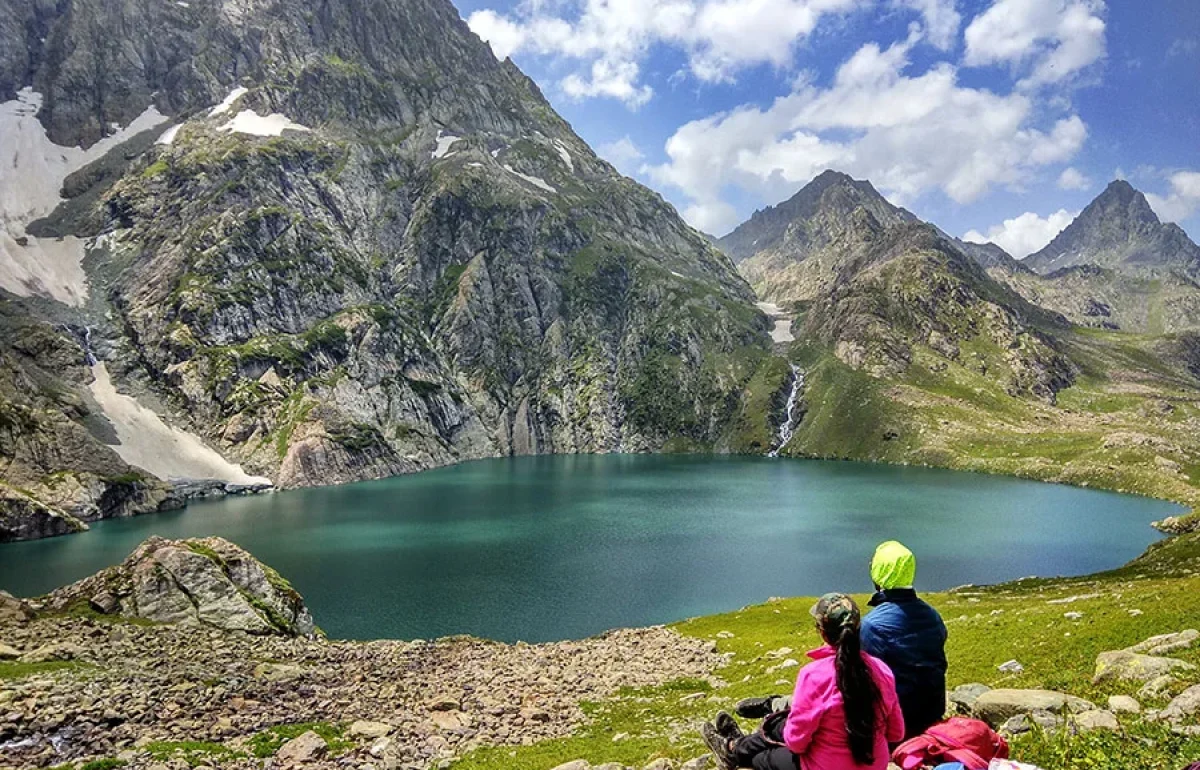
Then the landscape opens up again, and a blue alpine lake appears below the mountains.
That constant change is what makes the Kashmir Great Lakes Trek different from many other Himalayan routes.
The scale is another reason.
The meadows are wide and open, the valleys feel enormous, and the surrounding mountains create a completely different atmosphere from the forest-heavy trails found on many Himalayan treks.

Kashmir Great Lakes Trek Route and Major Highlights
The classic route generally travels from the Sonamarg side towards Naranag.
Instead of thinking about the trek only as a list of campsites, it is better to understand it through the landscapes and major highlights you encounter along the way.

Sonamarg and the Start of the Trek
The journey generally begins around the Sonamarg region.
From here, the trail gradually moves away from the familiar mountain roads and towards the high-altitude landscape.
The early sections introduce you to the terrain with green valleys, mountain streams, and forested stretches before the trail starts gaining more altitude.
As you move higher, the views become wider.

Nichnai Pass and Vishansar Lake

Trek detail image

One of the important sections of the trek is the climb towards Nichnai Pass.
After crossing the pass, the landscape changes again as you move towards the Vishansar region.
Vishansar Lake is one of the first major alpine lakes on the route.
Surrounded by mountains and open terrain, the lake creates one of those moments where you naturally slow down and take in the surroundings.
This is where the Kashmir Great Lakes experience starts feeling truly alpine.

Krishansar Lake and Gadsar Pass
The trail continues towards Krishansar Lake, another beautiful high-altitude lake surrounded by mountain landscapes.
From here, the route moves towards Gadsar Pass.
The pass is one of the highest points on the classic route and offers expansive views across the surrounding mountains.
The descent after the pass brings another change in scenery, with wide valleys and alpine landscapes continuing ahead.

Satsar
The journey then moves towards the Satsar region.
Satsar is known for a group of alpine lakes spread across the landscape.
Depending on the route and seasonal conditions, you may see different water bodies along this section.
The surrounding meadows make this part of the trek especially beautiful during the peak summer trekking season.

Gangbal and Nundkol
The final major lake region is Gangbal and Nundkol.
These lakes sit beneath the dramatic presence of Mount Harmukh, creating one of the most striking landscapes of the entire trek.
Gangbal is particularly memorable because of the combination of the lake, surrounding meadows, and massive mountain backdrop.
After this section, the trail eventually begins descending towards Naranag.

Naranag
Trek detail image

The trek finishes around Naranag, from where trekkers generally continue towards Srinagar by road.
After spending several days surrounded by high mountains, the descent towards the lower valley feels like a completely different landscape.
It is a fitting end to a trek that has taken you through so many changing environments.

How Difficult Is the Kashmir Great Lakes Trek?
The Kashmir Great Lakes Trek is generally considered moderate to difficult.
The main reason is the length of the trek and the altitude rather than technical climbing.
You will spend several hours walking on most trekking days, and the route includes multiple ascents and descents.
Some sections cross high mountain passes, with the highest points reaching around 13,700 feet.
This makes physical preparation important.
You do not need technical mountaineering skills, but you should be comfortable with long walking days and uphill climbs.

How to Prepare
Start preparing a few weeks before your trek.
Regular walking, stair climbing, jogging, and basic strength exercises can help improve your endurance.
Try to include longer walks on weekends so your body becomes comfortable with spending several hours on your feet.
The better prepared you are, the more time you can spend enjoying the landscape instead of focusing only on the climb.

Kashmir Great Lakes Trek Cost
The cost of the Kashmir Great Lakes Trek depends on several factors.
These include:

  • Trek duration

  • Group size

  • Transportation

  • Accommodation

  • Meals

  • Trek equipment

  • Permits

  • Backpack offloading

  • Type of departure

  • Private or group trek

A standard organized trekking package generally includes the core services required during the trek.
Before booking, look at the complete package rather than comparing only the headline price.

What Is Usually Included? Depending on the operator, a Kashmir Great Lakes Trek package may include:

  • Trek leader and local guides

  • Camping accommodation

  • Sleeping bags and sleeping mats

  • Meals during the trek

  • Cooking and support staff

  • Camping equipment

  • Trekking permits

  • First-aid support

  • Emergency support

The exact inclusions vary between packages.
Transportation from Srinagar, hotel stays, equipment rentals, and backpack offloading may be included in some packages and charged separately in others.
Always check the package details before confirming your departure.

How to Book the Kashmir Great Lakes Trek Online

Booking your trek online becomes much easier when you know exactly what to look for.
Start by choosing your preferred trekking dates.
Since Kashmir Great Lakes is a seasonal trek, check that your selected dates fall within the operating season.
Then look at what the package includes.
Check the pickup point, transportation, accommodation, meals, equipment, and other services included in the price.
It is also useful to check the group size and the experience of the trekking team.
For a high-altitude trek, the quality of trek support can make a significant difference to your overall experience.
Once you are comfortable with the itinerary, inclusions, and departure details, you can proceed with your booking.

What to Pack for the Kashmir Great Lakes Trek
Kashmir Great Lakes takes you to high altitudes, so your packing should focus on warmth, comfort, and weather protection.

Essential Trekking Gear

  • Good trekking shoes

  • Thermal inner layers

  • Fleece jacket

  • Warm down jacket

  • Waterproof jacket

  • Trekking pants

  • Woollen socks

  • Gloves

  • Warm cap

  • Sunglasses

  • Sunscreen

  • Headlamp

  • Water bottles

  • Personal medicines

  • Basic first-aid kit

  • Power bank

  • Trekking poles

Do not overload your backpack with things you will rarely use.
A well-planned backpack makes long trekking days much more comfortable.
Your trekking operator can also provide a specific packing list based on the season and current trail conditions.

Kashmir Great Lakes Trek for Beginners

Kashmir Great Lakes is not usually the first trek we would recommend to someone with no trekking background and no physical preparation.
However, a fit beginner who regularly walks and prepares properly can work towards this trek.
The important thing is to understand what you are signing up for.
This is a multi-day high-altitude trek with long walking sections and multiple mountain passes.
If you have already completed shorter Himalayan treks, the transition can feel much more comfortable.
For first-time trekkers, building endurance before the trip is one of the best things you can do.

Places You Will See on the Kashmir Great Lakes Trek
One of the biggest advantages of this trek is the variety of landscapes packed into a single route.
Vishansar Lake
A beautiful alpine lake surrounded by open mountain terrain.
This lake is near Vishansar and is another scenic addition to the trail.

Gadsar Pass
A highlight of the walk is the spectacular view of the mountains from the height.

Satsar Lakes
A group of lakes in alpine terrain.

Gangbal Lake
A highlight of the trail with the backdrop of Mount Harmukh.

Nundkol Lake
Located close to Gangbal, Nundkol adds another beautiful alpine setting before the descent towards Naranag.

What are the FAQs about the Kashmir Great Lakes trek?

What is the best time to do the Kashmir Great Lakes Trek?
Typically, July to mid-September is the main trekking season. In July, fresh greenery; in August, a month of lush meadows and wildflowers; and in September, clearer mountain views.

What is the difficulty level of the Kashmir Great Lakes Trek?
The route is mostly considered medium to hard due to its lengthy walking days, high elevation, and several passes in the mountains.

What is the duration of the Kashmir Great Lakes Trek?
In general, the classic route is a 6-7 day trek depending on the route and trekking operator.

What's the peak of the Kashmir Great Lakes Trek?
Elevations along the ride attain up to about 13,700 feet.

How long is the Kashmir Great Lakes Trek?
This is a classic route of about 65-75km but may vary depending on the chosen route.

Which lakes do you cross in the Kashmir Great Lakes Trek?
The highlights here are the Vishansar, Krishansar, Gadsar, Satsar, Gangbal, and Nundkol.

Which is the starting point of the Kashmir Great Lakes Trek?
The traditional route begins in Sonamarg or Shitkadi and ends in Naranag.

Can the Kashmir Great Lakes Trek be done by beginners?
Fit beginners can do some preparation to the trek, but it is best to get some good endurance before embarking on a multi-day trek at an elevated altitude.

How to prepare for the Kashmir Great Lakes Trek?
The packing list should include good trekking shoes, warm layers, waterproof clothing, trekking pants, gloves, sunglasses, sunscreen, a headlamp, water bottles, personal medicines, and other essential trekking gear.

What is the cost of the Kashmir Great Lakes trek?
The price varies between different trekking companies, departure types, group sizes, modes of transport, and inclusions. Look at all of the inclusions before you book, not just the price.

Final Thoughts
Kashmir Great Lakes is a type of trek that continually offers something new.
The meadows change.
The mountains change.
The lakes shift their hues with light.
Each pass presents a different perspective.
That is why this hike is one that will be unforgettable. Although you are walking toward one destination, it is not the only one. You're traversing a whole landscape of the Himalayas, which is continually unfolding in front of you.
For green Kashmir, you can consider the months of July and August to be beautiful. September is also a good choice if you prefer clear mountain views.
Select the season, prepare your body, plan your pack, and enjoy the journey.

Topic Tags

#Gangabal Lake Trek#Great Lakes Trek#Kashmir high altitude trek India#Himalayan Trekking India#HimTrek#Kashmir Adventure Trek#Kashmir Great Lakes Trek#Kashmir Great Lakes Trek Booking#Kashmir Hiking Tour#Kashmir Nature Trek#Kashmir Summer Trek#Kashmir Trek#August Batch#Kashmir Trek Booking#Kashmir Trek July Batch#Kashmir Trek Packages#Kashmir Trek Permit#Kashmir Trek#September Batch#Krishansar Lake Trek#trekking in Kashmir#Vishansar Lake Trek