


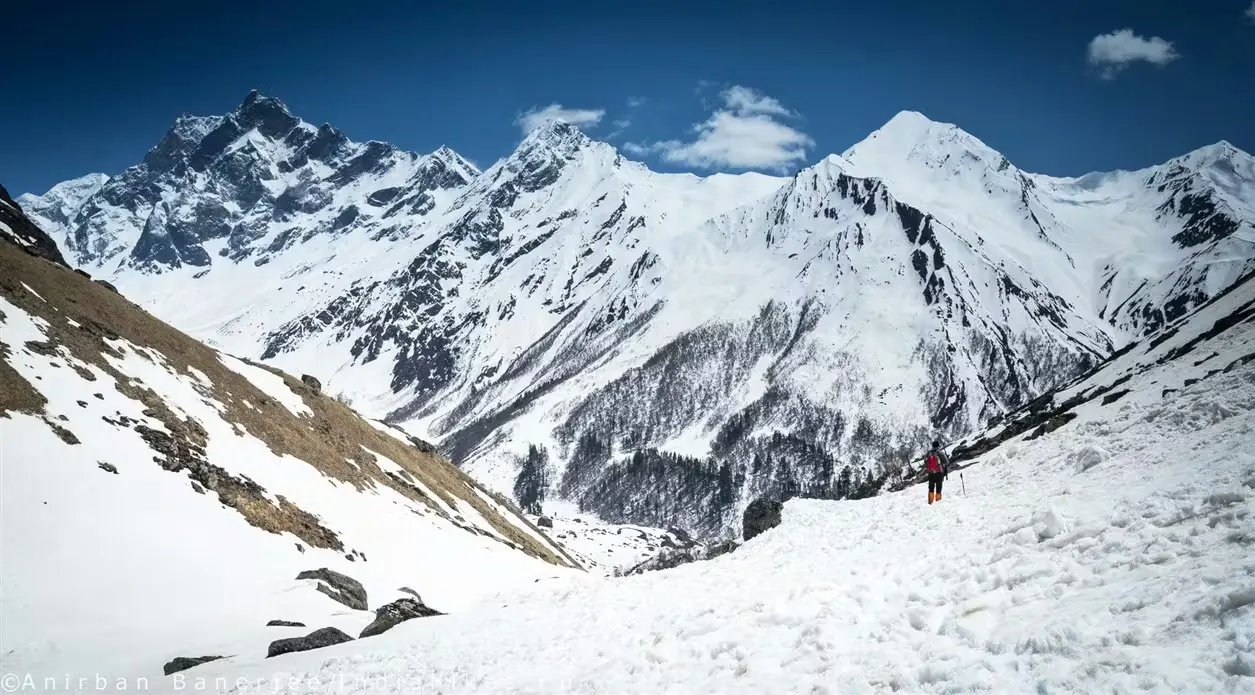
Some Himalayan treks are about reaching a summit.
Har Ki Dun is about entering a valley that feels like it has been there forever.
The trail follows the Thamsa River through forests, wooden bridges, and old mountain settlements before opening into the wide Har Ki Dun valley. In the distance, the Swargarohini massif rises above the landscape, while villages such as Osla and Gangad give the trek a cultural character that is missing from many high-altitude routes.
This is one of the reasons Har Ki Dun feels different from a typical Himalayan trek.
You are not simply walking from one campsite to another. You are moving through a living mountain landscape where forests, rivers, villages, and high meadows remain connected.
Har Ki Dun is generally considered a moderate trek and can suit fit beginners, but it still requires stamina because of the long walking days and changing terrain. If you are planning your first Har Ki Dun Trek, this guide covers everything you need to know, including the best time to visit, difficulty, route, weather, how to reach Sankri, things to see, packing, and important safety tips.
Har Ki Dun Trek: Location, Altitude & What Makes It Special
Har Ki Dun is situated in the Uttarkashi district of Uttarakhand under the Govind Pashu Vihar region of the Garhwal Himalayas.
The route is normally taken from Sankri, the principal entry point to this area of the mountains.
The Har Ki Dun valley is located at an elevation of approximately 11,600- 11,700 ft, depending on the route and point. It is surrounded by some of the most recognised peaks of the region, such as Swargarohini and Bandarpoonch.
The trek is not only special because of its altitude.
The journey goes through the old Himalayan villages which are still in close contact with the mountains. Osla and Gangad are especially famous for their old wooden architecture and cultural characteristics.
Another interesting feature about this trail is that it's also along the Thamsa River for a lot of its length, which means that there's a constant background of flowing water throughout the hike. This blend of nature, culture, and the mountainous landscape makes Har Ki Dun one of the most memorable valley hikes in Uttarakhand.
Best Time to Visit Har Ki Dun Trek
Har Ki Dun varies greatly from season to season.
The best time will vary depending on whether you're looking for spring flowers and snow, green lawns, clear fall skies, or a good winter.
The first half of each month is often snowy, and the latter half is often coloured with spring.
One of the most beautiful times to be on the Har Ki Dun trail is spring.
There may still be snow patches in higher areas, and the lower forests start to emerge from winter. Rhododendrons add colour to the landscape, and the valley gradually becomes greener.
Proper warm layers are important in early spring as it can be colder, especially at night.
Recently, travelers have also noted that April is a great time to trek in the Himalayas, and there are still snow patches to be found on the trail.
July to August: Comfortable Trekking and The Best of the West Highland Trail
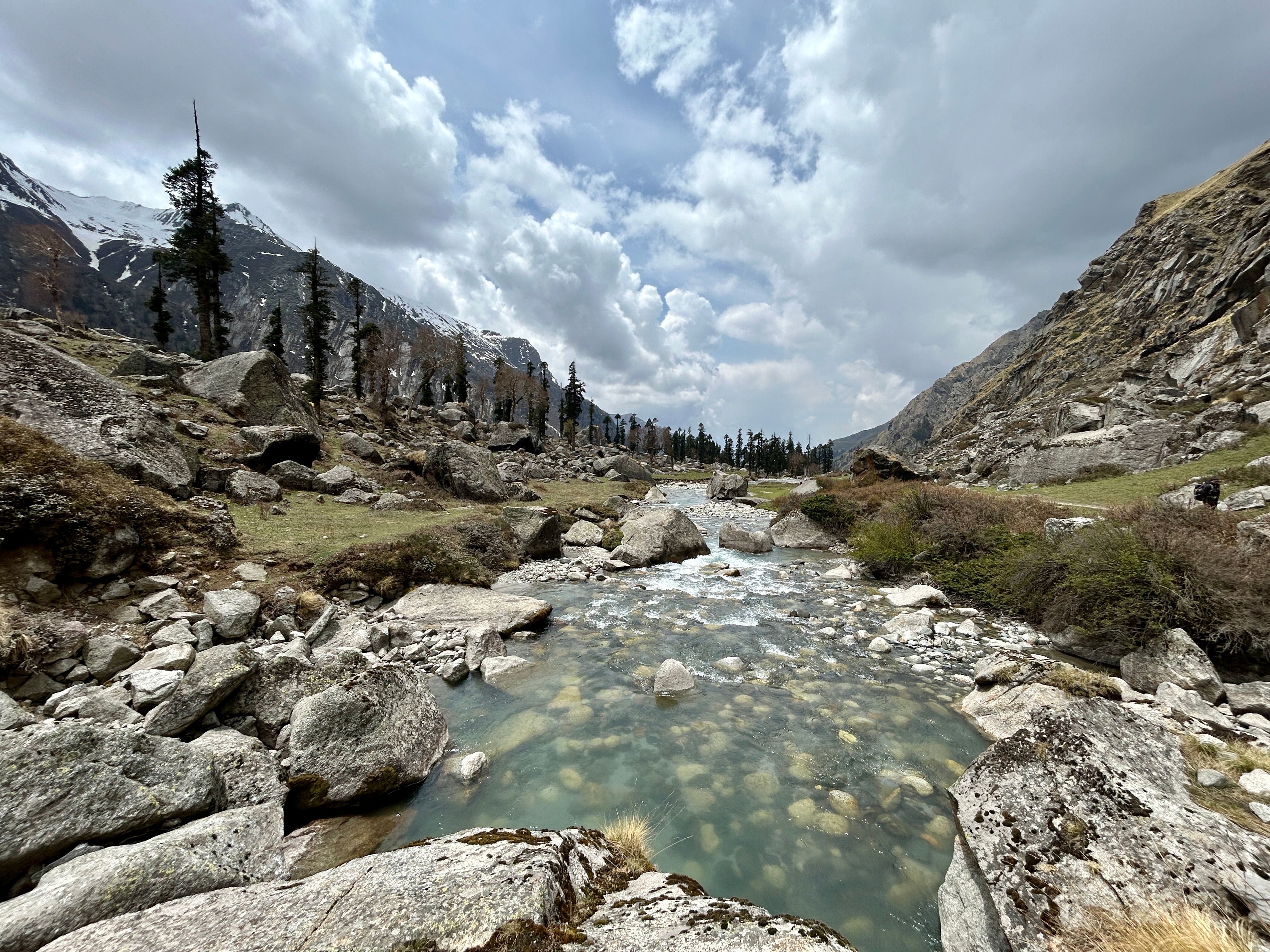
Har Ki Dun is one of the best times of the year to visit, with May and early June being among the best.
The weather is fairly good for long walking days; the meadows are greener, and the valley is fresh.
This is an excellent time for first-time trekkers to experience the trail without having to deal with heavy winter snow.
This is also the time of year when the route is busiest, so departure times may fill up quickly.
October to November: Clear Mountain View
Post-monsoon is a great time too.
The weather gets clearer, the trail dries out, and the Himalayan summits may look much more pristine.
The month of October is particularly good for trekking enthusiasts to enjoy clear views of Swargarohini and the surrounding mountains.
How Difficult Is the Har Ki Dun Trek?
Har Ki Dun is generally classified as a moderate trek.
The good news is that it does not involve technical climbing or a difficult high-altitude pass crossing on the standard route.
The challenge comes from the number of walking days, distance, and changing terrain.
The trail includes:
Forest paths
Rocky sections
River and stream crossings
Gradual climbs
Boulder sections
Meadow walking
A few steeper stretches The section around Gangaad to Kalkatiyadhar deserves particular attention. The trail becomes rockier here and includes a steeper climb, boulder sections, and a narrow stretch.
For a fit beginner, this is manageable with proper preparation.
You should be comfortable walking for several hours a day before attempting the trek.
Har Ki Dun Trek Route: What the Trail Is Actually Like
The exact route can vary between operators, but the classic Har Ki Dun experience begins around Sankri and moves through the Tons valley towards the upper Har Ki Dun valley.
Rather than thinking of it as a list of campsites, it is better to understand the route through its changing landscapes.
Sankri and the Lower Trail
Sankri is the main gateway for the trek.
From here, the journey moves deeper into the Govind Pashu Vihar region. The landscape gradually becomes more remote as the road gives way to walking trails.
Osla and Gangad
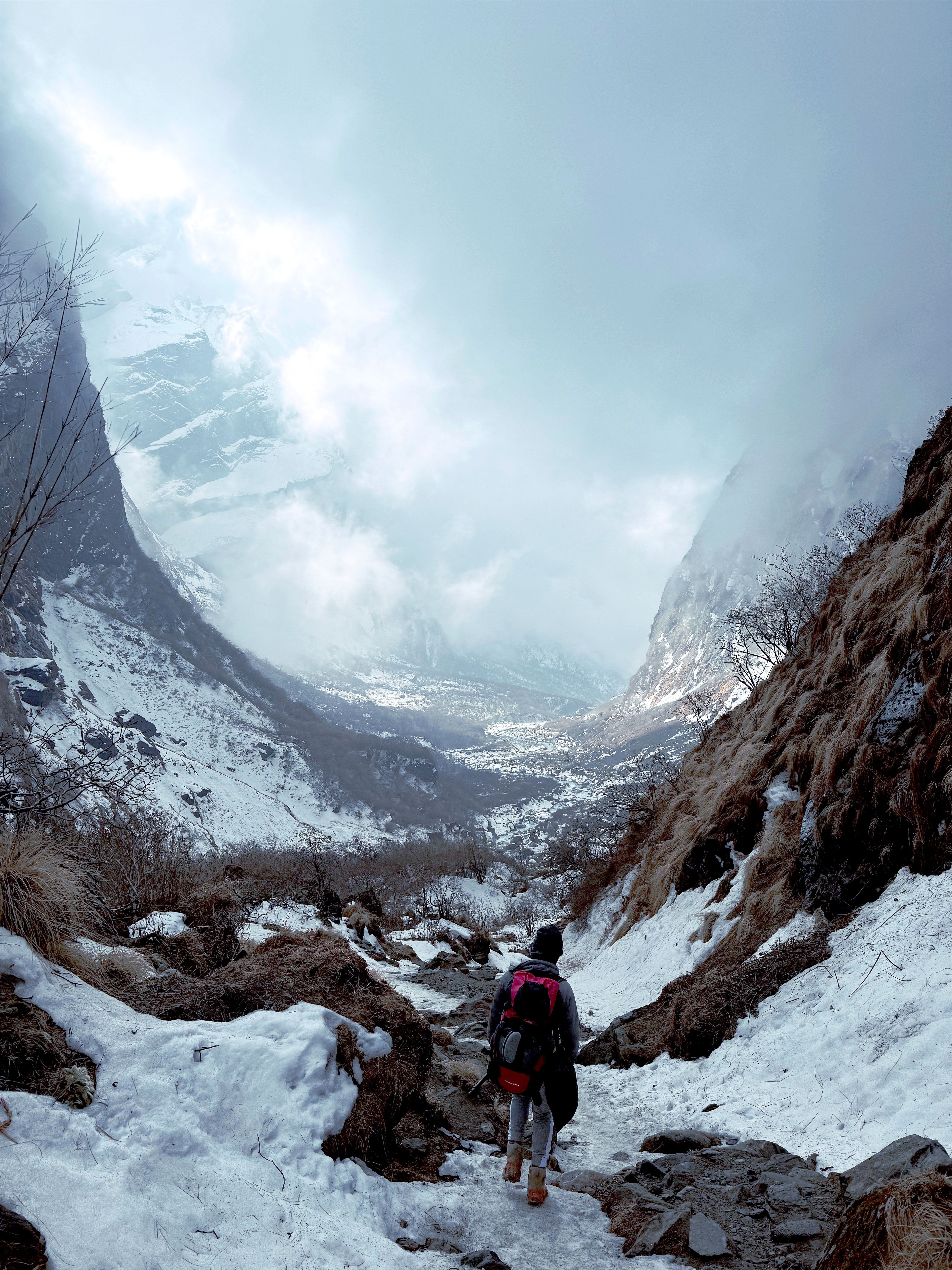
Osla and Gangad are two of the most interesting settlements on the route. Their traditional wooden houses and mountain setting give the trek a strong cultural element. This is one of the places where Har Ki Dun feels less like a conventional trekking trail and more like a journey through an older Himalayan way of life. Kalkatiyadhar The trail becomes more demanding around Kalkatiyadhar. The route has rocky sections and a steeper climb before opening towards the upper valley. Good footwear and steady footing become particularly important here. Har Ki Dun Valley Then comes the main attraction. The trail opens into the Har Ki Dun valley, with broad meadows and dramatic mountain walls around you. The Swargarohini range dominates the skyline on clear days. This is the section where the gradual journey through forests and villages finally opens into the high Himalayan landscape that most trekkers have come to experience. What Makes Har Ki Dun Different From Other Uttarakhand Treks?
Har Ki Dun has a combination that is not easy to find on a single trek.
Ancient Mountain Villages
You do not simply pass through forests. You also encounter villages where traditional architecture and mountain life remain part of the landscape.
River-Following Trail
The Thamsa River accompanies much of the route, creating a completely different atmosphere from ridge-based treks.
Himalayan Meadows
The upper valley opens into large meadows surrounded by high mountains.
Mountain Views
Swargarohini, Bandarpoonch and other peaks become prominent around the upper valley when weather conditions are clear.
Mythology and Local Culture
Har Ki Dun is also associated with the Pandavas and the route towards Swargarohini in local traditions.
The mythology adds another layer to the trek, but the cultural stories are best understood alongside the living traditions of the villages rather than treating them simply as tourist attractions.
Can Beginners Do the Har Ki Dun Trek?
Yes, fit beginners can do Har Ki Dun.
It is actually considered one of the better choices for someone looking to move beyond short or easy Himalayan treks.
But beginner-friendly does not mean effortless.
You still need to prepare for multiple days of walking. Current trekking guidance describes the route as moderate and highlights stamina as an important requirement because of the longer trekking days.
Before your trek, focus on:
Brisk walking
Stair climbing
Jogging
Leg strengthening
Weekend hikes
Long-distance walking Try to build your endurance gradually instead of suddenly increasing your activity a few days before departure.
Sankri is the main base for the Har Ki Dun Trek.
Most travellers first reach Dehradun and continue towards Sankri by road.
The road journey passes through the mountain regions of Uttarakhand and takes several hours. Current trek operators commonly quote around 8 to 10 hours from Dehradun, depending on road and traffic conditions. You can reach Dehradun by:
Train
Bus
Flight
From Dehradun, shared vehicles, private taxis, or trek operator transport can be used to reach Sankri.
Mountain road travel can take longer than expected, so avoid keeping a very tight schedule between your arrival in Dehradun and your onward journey.
What Should You Pack for Har Ki Dun?
Your packing list should change according to the season.
For a regular spring, summer, or autumn trek, carry:
Good trekking shoes
Waterproof jacket
Fleece layer
Warm jacket
Trekking pants
Thermal layers
Woollen socks
Gloves
Cap
Sunglasses
Sunscreen
Water bottles
Headlamp
Personal medicines
Basic first-aid supplies
Power bank
Small daypack
For winter, proper snow equipment may be necessary depending on the current trail conditions.
Avoid overpacking. Har Ki Dun involves long walking days, and carrying unnecessary weight can make the trek significantly harder.
Mountain weather can change quickly.
Even when the morning begins with clear skies, clouds can build around the higher valley later in the day.
Stay with your group and follow the instructions of your trek leader or local guide.
Be particularly careful around river crossings and wet rocky sections. Water levels can change after rainfall.
If you develop symptoms of altitude sickness such as severe headache, dizziness, nausea, or unusual weakness, inform your trek leader immediately.
Do not treat altitude symptoms as something you simply have to tolerate.
And never make reaching the final campsite more important than your safety.
Here are some of the most Frequently asked questions for this trek:
March-June and September-November are typically the best times to visit. In the spring, flowers and snow are still around, and in the fall, skies are clear, and mountains are visible. It is best to stay out of peak monsoon as it is wet and the trails are muddy.
Is Har Ki Dun beginner level?
Yes. Har Ki Dun is a moderate hike and should be able to be completed by a moderately fit beginner who is well prepared. The primary difficulty is simply the long walk over several days, not the technical climbing.
How many meters high is Har Ki Dun?
The valley of Har Ki Dun is approximately 11600-11700 feet above sea level based on the location and route of reference.
How many days does the Har Ki Dun Trek take?
The trek usually lasts for about five days, and the whole tour from Dehradun to Badakerey and back is usually about six to eight days depending on the company and route.
Where is the starting point of Har Ki Dun trek?
This trek is typically started from Sankri, located in the Uttarkashi district; the selection of roadhead will vary depending on the route and the operator.
Is Har Ki Dun open during monsoon?
The trail and approach roads may be impassable during the monsoon. Some of the reasons for the suspension of regular flights during the peak monsoon are heavy rain, slippery areas, swollen rivers, and landslide-prone roads.
What is Har Ki Dun known for?
The stunning valley of Har Ki Dun and traditional villages of the Himalayas, the Thamsa River, alpine meadows, and the view of the peaks such as Swargarohini and Bandarpoonch make it a beautiful place to visit.
Is it possible to do Har Ki Dun in the winter?
Yes, there are winter treks, but the route may be more difficult in the snow. Winter conditions are different, and when trekking, you need the right gear, know how to do it, and have up-to-date information about trails and roads.
Which is harder, Har Ki Dun or Kedarkantha?
Both treks are different. Har Ki Dun is not as steep as Kedarkantha and does not have a major summit push but includes longer walking days with more extended trekking. This can therefore vary according to fitness and season.
Final Thoughts
Har Ki Dun isn't a trek to impress you with a dramatic peak.
It's allure begins much earlier.
It is the voice of the river which is beside the path. It's a set of wooden houses in Osla. When you stroll through a forest and you come to a valley opening in front of you. It stands in high meadows, while Swargarohini is in the distance.
This is why Har Ki Dun is special.
If you want a trek in the mountains, forests, villages, culture, and a rewarding valley experience, then Har Ki Dun is one trek that you should definitely put on your list.
Be mindful of the time of year you travel, train your legs for a long walk, and be sure to have ample time to enjoy the trail.
On Har Ki Dun, it's not a pre-trek trek before you go on the trek.