
Online booking disabled (no dates added)
Highlights
Trek to Churdhar Peak at 3,647 m / 11,965 ft
Explore the beautiful Churdhar Wildlife Sanctuary
Trek through dense pine, oak and deodar forests
Experience the transition from forest trails to alpine meadows
Visit the sacred Chureshwar Mahadev / Shirgul Devta Temple
Enjoy panoramic views from the Churdhar ridge
Experience the peaceful landscapes of Sirmaur, Himachal Pradesh
Spot Himalayan birds such as monal, koklass and kalij pheasant in the surrounding region
Experience dramatic changes in weather and landscape with increasing altitude
Enjoy a challenging but rewarding Himalayan summit trek
Experience the cultural and spiritual significance of Churdhar Peak
About the Trek
Churdhar Trek is one of the most rewarding high-altitude weekend treks in Himachal Pradesh, taking you to Churdhar Peak at 3,647 metres (11,965 ft). Located in the Sirmaur region, Churdhar is recognised as the highest peak in Sirmaur district and the highest point of the Outer Himalayas.
The most popular approach to the summit starts from Nohradhar, a small mountain settlement in Sirmaur. From here, the trail gradually climbs through dense Himalayan forests before opening into higher meadows and exposed mountain terrain.
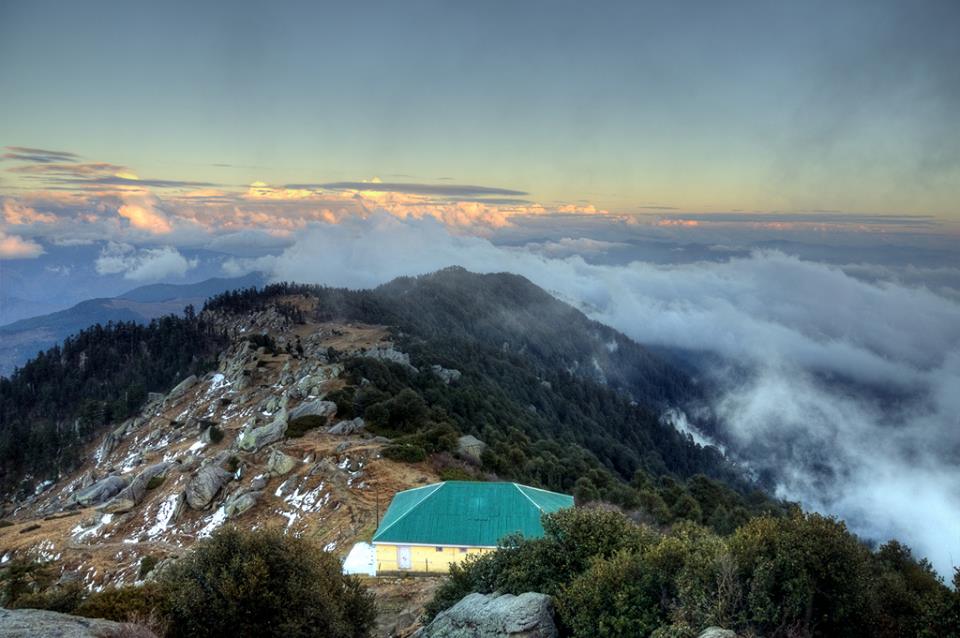
As the altitude increases, the landscape changes from forested slopes to alpine terrain. The final section leads towards Churdhar Peak and the Chureshwar Mahadev/ Shirgul Devta temple area, an important religious site associated with the mountain.
The summit is the biggest reward of the trek. On a clear day, the elevated position of Churdhar provides expansive views towards the surrounding Himalayan ranges and the plains far below. Himachal Tourism notes that views can extend towards peaks around Badrinath and Kedarnath as well as the Gangetic plains.
The trek combines mountain adventure, forest trails, high-altitude landscapes, local religious traditions and panoramic summit views, making it an excellent choice for trekkers looking for a challenging Himalayan experience without entering the higher expedition zones of the Greater Himalayas.
Quick Facts
Category | Details |
Trek Name | Churdhar Trek |
Region | Sirmaur, Himachal Pradesh |
Starting Point | Nohradhar |
Summit | Churdhar Peak |
Maximum Altitude | 3,647 m / 11,965 ft |
Trek Distance | Approx. 36 km round trip via Nohradhar |
Difficulty Level | Difficult / Challenging |
Trek Duration | 2–3 Days |
Best Season | April–June & September–November |
Terrain | Forest trails, steep climbs, meadows and rocky sections |
Major Attraction | Churdhar Peak & Chureshwar Mahadev Temple |
Base Village | Nohradhar |
Accommodation | Camping / basic mountain stay depending on package |
Suitable For | Physically fit and experienced trekkers |
The Churdhar Trek Himachal Pradesh offers a different kind of Himalayan experience from the popular meadow treks around Manali or Uttarakhand.
The route begins at a relatively low elevation and steadily climbs towards the 3,647-metre summit. This gradual change in altitude allows trekkers to experience several Himalayan landscapes during the same trek.
The lower trail is dominated by forests, while higher sections become more open, rugged and exposed.The summit area has a distinctly alpine character, especially during the colder months.One of the most meaningful aspects of the trek is that Churdhar is not only a mountain destination but also a place of religious importance.
Churdhar Peak – The Highest Point of the Outer Himalayas
At 3,647 metres, Churdhar Peak is the highest peak of Sirmaur district and the highest point in the Outer Himalayas.
The peak is also locally associated with names such as Choor Chandni, often interpreted as referring to the mountain's snow-covered appearance.
From the summit ridge, the landscape opens dramatically in all directions. On clear days, trekkers can see extensive mountain ranges as well as the plains towards the south.
The panoramic viewpoint is one of the main reasons trekkers undertake the long climb from Nohradhar.
Churdhar Temple & Spiritual Significance
Near the summit stands the temple associated with Shirgul Devta / Chureshwar Mahadev, while a Lord Shiva temple is also located at the peak. Churdhar has long been regarded as an important religious destination in the Sirmaur region.
For local devotees, the mountain is much more than a trekking destination.
Trekkers should maintain respectful behaviour around the temple and religious areas, especially during local festivals or periods of pilgrimage activity.
Churdhar Wildlife Sanctuary
A major part of the trek passes through the Churdhar Wildlife Sanctuary.
The sanctuary covers approximately 55.52 sq. km and lies along the boundary of Sirmaur and Shimla districts. The Chur Peak itself lies within the sanctuary.
The landscape supports:
Himalayan forests
Alpine flora
Medicinal plants
Monal
Koklass pheasant
Kalij pheasant
Musk deer
Himalayan black bear
Wildlife sightings are never guaranteed, so trekkers should treat the sanctuary as a natural habitat rather than a wildlife-spotting destination. Himachal Tourism confirms the presence of several of these species in the region.
Landscape & Natural Beauty
The Churdhar Trek route changes significantly as you gain elevation.
Himalayan Forests
The lower and middle sections pass through dense forests containing:
Pine
Deodar
Oak
The forest provides shade during portions of the ascent while also making the climb feel more gradual.
Alpine Meadows
As the trail moves higher, the forest becomes thinner and open meadows begin to appear.
During the flowering season, these areas can become particularly scenic.
High-Altitude Terrain
Near the upper sections, the landscape becomes:
Rocky
Open
Windy
Steeper
More exposed
During winter and early-season conditions, snow can make the upper trail significantly more difficult.
Why Churdhar Trek Is Special
Unlike a short forest hike, the Churdhar Trek offer a complete mountain journey.
You experience:
Dense Himalayan forests
Long uphill climbs
Alpine meadows
High-altitude terrain
A 3,647-metre summit
Himalayan panoramic views
A sacred mountain temple
Wildlife sanctuary landscapes
Local culture and traditions
The combination of summit trekking + spirituality + wilderness makes Churdhar particularly distinctive.
Why Choose Churdhar Trek?
1.Summit the Highest Peak of the Outer Himalayas
At 3,647 metres, Churdhar provides trekkers with the opportunity to climb one of the most prominent peaks of the Outer Himalayas.
The long ascent from Nohradhar makes reaching the summit feel genuinely rewarding.
2. Trek Through Churdhar Wildlife Sanctuary
Much of the route passes through protected mountain landscapes.
The forest section is especially enjoyable for trekkers who like:
Dense forests
Birdwatching
Alpine vegetation
Quiet trails
Less-commercialised mountain environments
3. Experience Chureshwar Mahadev Temple
The temple near the summit adds a cultural and spiritual dimension to the trek.
It is common to find both trekkers and devotees on the mountain during the trekking season.
4. Panoramic Himalayan Views
The summit offers expansive views across the surrounding mountains and plains.
On clear days, distant Himalayan peaks can become visible beyond the nearer ridges.
5. A Challenging Himalayan Weekend Trek
Although Churdhar does not reach the extreme elevations of many expedition-style Himalayan treks, the long distance and sustained elevation gain make it physically demanding.
The Himachal Pradesh trekking portal classifies the Nohradhar–Churdhar route as HARD, so trekkers should not underestimate the climb.
Best Time to Do Churdhar Trek
The best time for Churdhar Trek is generally during the spring, early summer and post-monsoon months. The official Sirmaur district information states that Churdhar can be visited from April through November, while practical trekking sources commonly recommend April–June and September–November.
April to June
This is one of the most attractive periods for trekking.
What to expect:
Pleasant conditions in lower sections
Green forests
Wildflowers in suitable areas
Comfortable daytime trekking temperatures
Possibility of snow at higher elevations early in the season
July to August – Monsoon
The route can become challenging because of:
Rain
Muddy trails
Slippery rocks
Reduced visibility
Increased risk of landslides on approach roads
For a commercial trek, the actual operating decision should depend on current weather and trail conditions.
September to November
Post-monsoon is another excellent window.
Highlights include:
Cleaner mountain air
Better visibility
Green landscapes early in the season
Clearer summit views
Cooler nights
By late autumn, temperatures can drop considerably at higher camps.
Winter
Snow can cover the upper sections and make the trail considerably more challenging.
Winter attempts should only be undertaken after checking current trail conditions and with appropriate equipment and experience.
Churdhar Trek Difficulty
Difficulty: Difficult / Challenging
The Churdhar Trek difficulty comes primarily from the long distance and sustained uphill elevation gain rather than technical climbing.
The Nohradhar route climbs from around 1,900 m to 3,647 m, giving an elevation gain of more than 1,700 metres. If you're looking for another challenging Himalayan experience, you can also explore the Kedarkantha Trek.
Major Challenges
Long trekking distance
Sustained uphill climb
High elevation gain
Steep sections
Rocky and uneven terrain
Weather changes
Cold and wind near the summit
Snow during winter/early season
The government trekking portal specifically categorises the route as
Who Can Do Churdhar Trek?
Suitable For
Experienced trekkers
Physically fit adventure enthusiasts
Trekkers comfortable with long uphill walks
People with previous Himalayan trekking experience
Those comfortable with camping and basic mountain conditions
Not Recommended For
Completely unprepared first-time trekkers
People with poor cardiovascular fitness
Anyone uncomfortable with long climbs
Trekkers attempting the route without appropriate preparation
Fitness Requirements
Because the route involves a long ascent, preparation is important.
Cardiovascular Training
Start training at least 6-8 weeks before the trek.
Recommended:
Brisk walking
Running
Cycling
Stair climbing
Incline walking
Long weekend hikes
A useful preparation target is being able to comfortably walk 8-10 km without excessive fatigue.
Strength Training
Focus on:
Squats
Lunges
Step-ups
Calf raises
Core exercises
Strong legs are particularly useful during the long descent from Churdhar.
Churdhar Trek Route
The Churdhar Trek route has several approaches.
Nohradhar Route
This is the most commonly travelled route and the route recommended for the Himtrek product.
After Nohradhar, you'll reach the Forest Trail and then move to the Upper Camp. Next, you will go to the Churdhar Temple followed by Churdhar Peak.
The official page of the district Sirmaur states that Nohradhar is the famous path and the hike to its peak is about 18 kms.
Sarain / Chopal Route
The Chopal/Sarain side is shorter.
But the short trip is not necessarily a fun one, as some parts may be steeper. According to official tourist information Chopal as another gateway to Churdhar is also identified.
Haripurdhar Route
The other trek way to Churdhar is known as Haripurdhar which is not used very frequently for traditional packages.
For my own commercial product, I would never include routes on the same page that I didn't know they ran.
Churdhar Trek Distance
The distance of the Churdhar Trek varies according to the approach. The official website of Sirmaur district gives an estimate of about 18 km to reach Churdhar from Nohradhar, which will involve a round trip of about 36 km for the popular route.
The Sarain/Chopal approach is much shorter.
Since the distance from different sources is measured from different sources, Himtrek should provide the exact distance value based on their operational GPS/route measurement.
Churdhar Trek Altitude
The Churdhar Trek altitude reaches:
3,647 metres / 11,965 feet Thus, Churdhar is the highest peak in Sirmaur district and the highest peak in Outer Himalayas. The altitude rises slowly from Nohradhar but the last few parts were still quite a hike due to the consistent rise.
Churdhar Trek Weather
The weather on Churdhar is very changeable, particularly near the top.
Trekkers may experience:
Sunshine
Cloud cover
Strong winds
Rain
Mist
Cold temperatures
Snow in the colder months of the year.
The summit ridge is more exposed than the forest sections and wind and visibility must always be taken into account when making plans for the push to the summit.
Churdhar Trek Camping
Camping is an integral component of the Churdhar trek package of several days.Campings can be arranged around specified upper route locations depending on the Himtrek arrangement.
Trekking tents
Sleeping bags
Sleeping mats
Dining arrangement
Hot meals
Trek leader
Support staff
First-aid kit
There is limited accommodation at higher elevations, so trekkers should expect to camp at their own level and not expect to find a hotel.
The things that you should take with you for trekking to Churdhar are:-
Trekking Essentials
✔ 40–50 litre backpack
✔ Backpack rain cover
✔ Trekking shoes with good grip
✔ Trekking poles
✔ Headlamp
✔ Food boxes / lunch bags.
✔ Sunglasses
✔ Sunscreen
✔ Personal first-aid kit
Clothing
✔ Thermal innerwear
✔ Fleece jacket
✔ Warm/down jacket
✔ Waterproof jacket
✔ Quick-dry trekking pants
✔ Warm socks
✔ Gloves
✔ Woollen cap
Personal Items
✔ Personal medicines
✔ Toiletries
✔ Lip balm
✔ Sunscreen
✔ Power bank
✔ Small towel
✔ Personal identification document
Documents
✔ Government ID
✔ Emergency contact details
If necessary, relevant medical/fitness documentation is provided.
How to Reach Churdhar Trek Base Camp
By Road
On the Nohradhar trek, people usually arrive at Nohradhar through the Sirmaur district.
One of the most popular strategies in Delhi is:
Delhi → Ambala → Chandigarh → Solan/Rajgarh → Nohradhar
Even the official Sirmaur tourism website mentions road approaches to Nohradhar from Nahan or Renuka and Solan or Rajgarh.
By Train
The most convenient ones are railway stations which are in the closest vicinity of the travelling route and the method of transport.
The most helpful information for a Himtrek package would be the point where the traveler could pick it up, instead of the closest railway station.
By Air
According to the official information about Sirmaur tourism, Chandigarh and Dehradun are the nearest airports from Churdhar area. The last product page should detail the exact
pickup/transfer arrangement for Himtrek.
Safety Guidelines
1. Respect the Altitude
Churdhar is below 4000 metres, but the peak is 3647m.
Keep up a slow tempo and do not over-exert yourself.
2. Start the Summit Day Early
Early start means more daylight time for the climb and descent and less danger of being caught on the upper trail in the dark.
3. Check Weather Conditions
Don't just use a set seasonal time frame.
The route may be affected by heavy rain, snow, strong winds or poor visibility.
4. Follow the Trek Leader
Always follow instructions regarding:
Pace
Rest stops
Route
Weather
Summit turnaround
Emergency procedures
5. Respect Churdhar Sanctuary
The mountain is a sensitive natural environment.
Do not litter.
Avoid single-use plastic.
Please do not disturb wildlife.
Don't feed wild animals.
Carry waste back.
Avoid straying from established trails, if possible.
6. Respect Religious Sites
Churdhar is of great religious importance.
Respect the rules of behaviour at the temple and pilgrimage sites.
Explore More Himalayan Treks with Himtrek
Looking for more Himalayan adventures after the Churdhar Trek? Explore other Himtrek trekking experiences across Himachal Pradesh and Uttarakhand. For a shorter Dharamshala adventure, explore the Triund Trek or Kareri Lake Trek. If you're looking for another challenging Himalayan experience, consider the Kedarkantha Trek, Chopta Chandrashila Trek, or Dayara Bugyal Trek. Have questions about the Churdhar Trek, departure dates, availability or trek preparation? Contact Himtrek for current package details.
Churdhar Trek Complete Information
Expand each section below to see all the details you need to prepare.
Inclusions
What's Included
- Accommodation : The duration of the trek and its campings , Sleeping tents , Sleeping mats , Sleeping bags.
- Meals : Breakfast , Lunch / packed lunch , Evening snacks , Dinner.
- Trek Support : Experienced trek leader , Local mountain guide , Support staff , Cookery staff as appropriate.Cookery staff (as appropriate).
- Safety : First-aid kit , Emergency communication arrangements , Basic emergency support.
- Camping Equipment : Trekking tents , Dining arrangement , Kitchen equipment, as applicable. Transportation If it is part of the Himtrek package, only mention transportation here.
Exclusions
What's Not Included
- Go from home to pick up location
- Personal expenses
- Food and drinks for individual use
- Personal trekking equipment
- Insurance
- Medical expenses
- Emergency evacuation
- Additional lodging due to weather delays
- Costs for changes of route or nature of the work.
- All other services that are not listed under inclusions.
Photo Gallery
1 Photos