


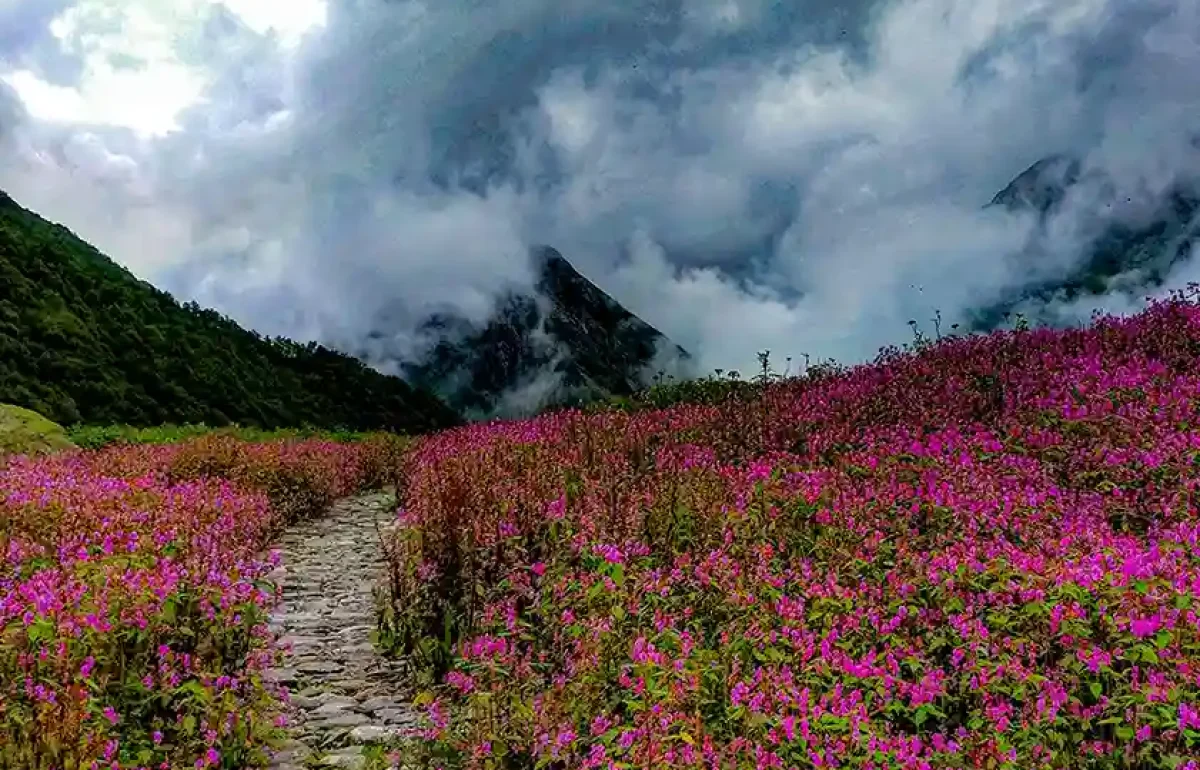
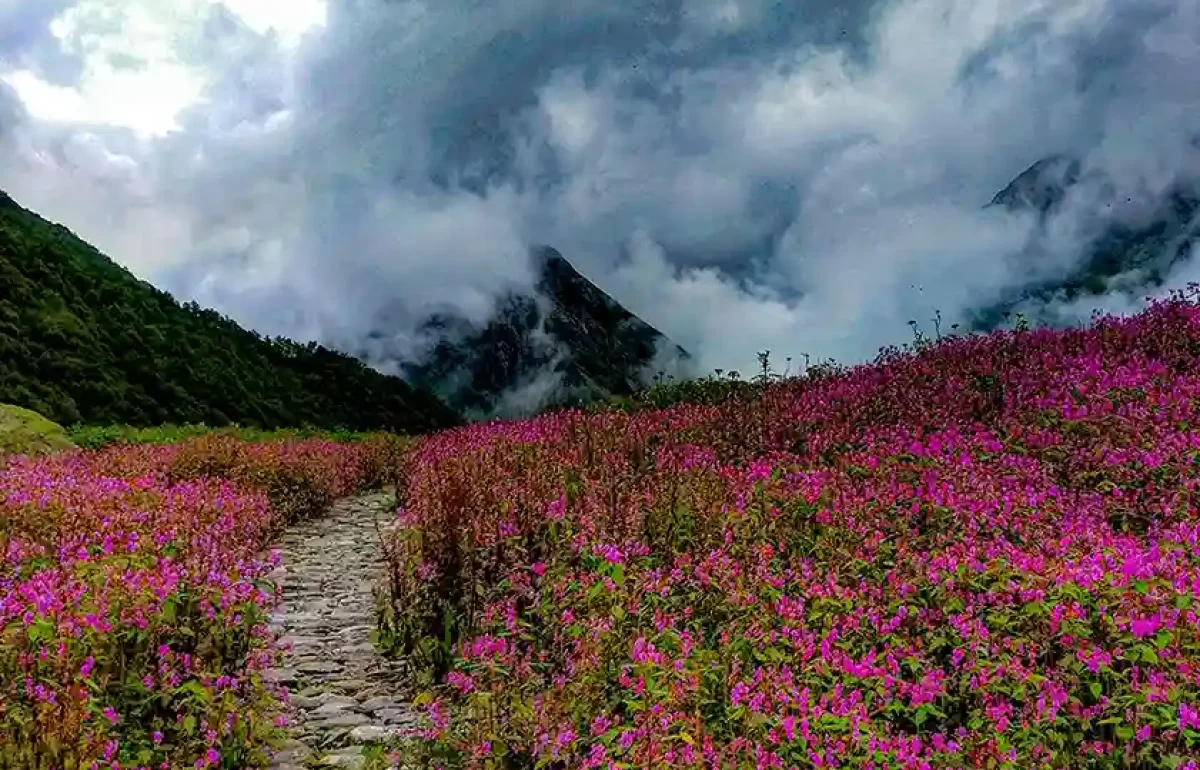
Few places in the Himalayas feel as alive as the Valley of Flowers during the monsoon. In July, the landscape around this famous national park in Uttarakhand starts turning lush green, waterfalls become more active, and alpine flowers begin adding color to the wide mountain meadows.
The Valley of Flowers Trek in July is a popular choice for trekkers who want to experience the Himalayas during their vibrant monsoon season. If you are planning the complete trek, you can also check Himtrek's Valley of Flowers Trek package for the current itinerary, inclusions and departure details.
So, is July a good time to visit the Valley of Flowers? What is the weather like? How difficult is the trek, how much does it cost, and what should you pack? This complete July guide covers everything you need to know before planning your trek.
Valley of Flowers Trek at a Glance
Details | Information |
Location | Chamoli district, Uttarakhand |
Trek Base | Ghangaria |
Starting Point | Govindghat/Pulna |
Trek Difficulty | Moderate |
Best Season | July to September |
July Weather | Cool, wet, and unpredictable |
Duration | Around 5 to 7 days |
Altitude | Approximately 3,500 m in the Valley |
Main Attraction | Alpine flowers, meadows, and Himalayan scenery |
Suitable For | Beginners with good fitness and experienced trekkers |
Is July a Good Time for the Valley of Flowers Trek?
Yes, July can be a good time for the Valley of Flowers Trek, particularly if you want to see the valley during its lush monsoon transformation.
The valley starts becoming greener as the monsoon progresses, and different varieties of
alpine flowers begin blooming. You can also expect flowing waterfalls, fresh streams, and mist-covered mountains.
However, July is not completely predictable. Rainfall can affect trekking and road conditions, especially during heavier monsoon spells.
If your priority is greenery, flowers, and dramatic monsoon scenery, July is a rewarding month. If you prefer relatively stable weather and drier trails, you may want to consider another part of the trekking season. If you are comparing different routes for the monsoon season, you can also explore Himtrek's guide to the best treks in July in India.
Valley of Flowers Weather in July
The weather in Valley of Flowers during July is generally cool, wet, and unpredictable.
Rain is common because July falls within Uttarakhand's monsoon season. Ghangaria and the lower approach routes can receive frequent rainfall, while the valley itself can experience clouds, mist, and occasional showers.
Mornings can sometimes offer better visibility, although weather conditions can change quickly.
The important thing to remember is that July is not primarily challenging because of extreme cold. Rain, slippery sections, and changing weather are the bigger concerns.
A waterproof rain jacket, backpack rain cover, and trekking shoes with good grip should therefore be considered essential.
What Is the Valley of Flowers Trek Route?
The standard Valley of Flowers route starts from Govindghat, with the road journey continuing towards Pulna. From there, the trekking section begins.
Govindghat to Pulna
Govindghat is the traditional starting point for the trek. From here, trekkers usually travel by road to Pulna, which reduces the initial walking distance.
Pulna to Ghangaria
The trek from Pulna to Ghangaria is one of the main walking sections of the journey.
The trail passes through forests, mountain villages, bridges, and waterfalls while gradually gaining altitude.
Ghangaria is the main base for exploring both the Valley of Flowers and Hemkund Sahib.
Ghangaria to Valley of Flowers
From Ghangaria, the trail enters the Valley of Flowers National Park.
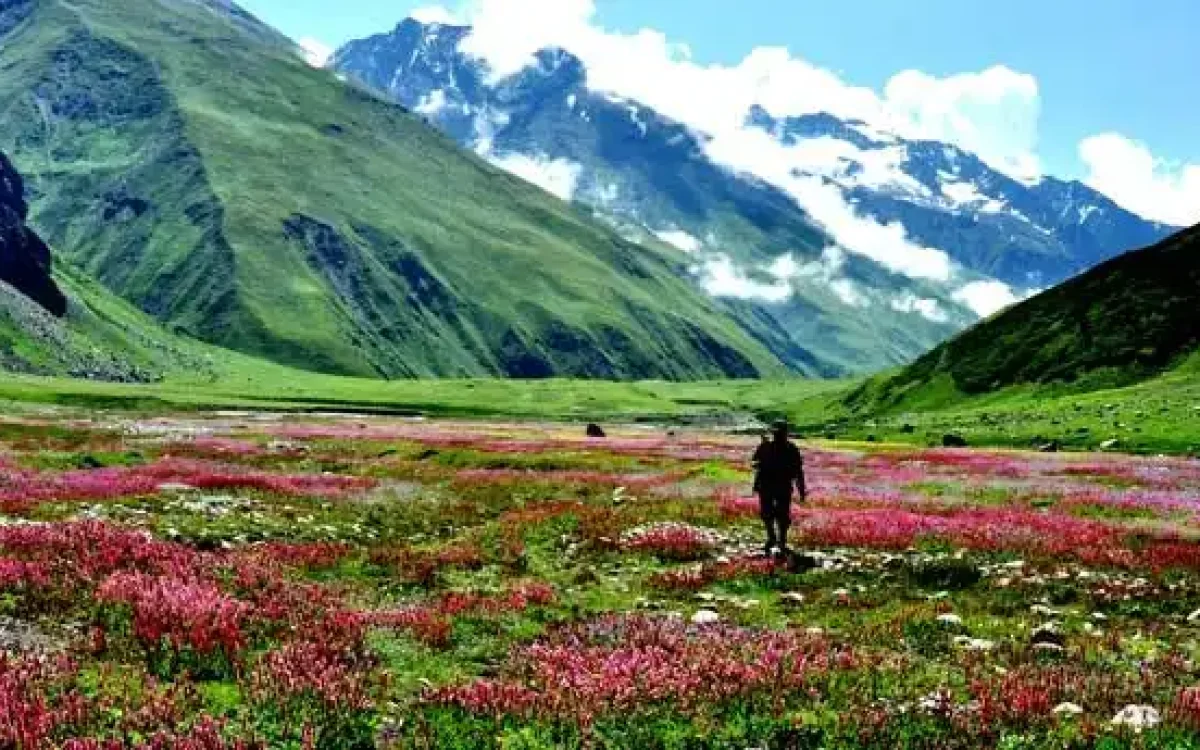
The scenery gradually opens up into broad alpine meadows surrounded by mountains. During July, the landscape becomes increasingly green and colorful as flowers begin appearing across the valley.
After exploring the valley, trekkers return to Ghangaria.
Ghangaria to Hemkund Sahib
Hemkund Sahib is an optional excursion from Ghangaria.
The route is much steeper and requires more physical effort than the Valley of Flowers trail. Trekkers who plan to visit both destinations should keep an additional day in their itinerary.
How Difficult Is the Valley of Flowers Trek?
The Valley of Flowers Trek is generally considered a moderate trek.
There is no technical climbing involved, but that does not mean the trek is effortless. The walk can be physically demanding due to the long walking hours, the (uphill) sections, the uneven ground, the altitude, and the monsoon conditions. Trekkers looking for a shorter and easier introduction to Himalayan trekking can also consider the Nag Tibba Trek.
If the hiker is moderately physically fit and is well prepared, he or she is able to make the trek.
Regular walking, stair climbing, and simple and light cardiovascular exercise will make you more comfortable with the long days of trekking.
The last stretch to higher sections may be more challenging due to the altitude, and therefore a more controlled pace is essential than a fast pace.
How many days are required to do a Valley of Flowers trek?
The average time to visit the Valley of Flowers is 5 to 7 days, depending on your starting point, travel arrangements, and whether you opt for Hemkund Sahib.
A typical route would be
Day 1: Haridwar/Rishikesh to Govindghat
Day 2: Govindghat to Ghangaria
Day 3: Ghangaria to Valley of Flowers and back
Day 4: Hemkund Sahib or rest day
Day 5: Ghangaria to Govindghat
Day 6: Govindghat to Haridwar/Rishikesh
The actual date is subject to change with your trekking company/arrangements.
What flowers can you see in July?
The flowers are the biggest attraction of the Valley of Flowers.
Depending on the weather and the time of the season, several Himalayan alpine flowers may be encountered, such as.
Himalayan blue poppy
Primula
Anemone
Potentilla
Bistorta
Bellflower
Cobra lily
Brahma Kamal
This is the start of the more colorful flowering period, but the valley may not have flowers all the time in July.
The other reason is that various flowers emerge at various times, constantly changing the landscape throughout the season.
What is the cost of a Valley of Flowers Trek? The cost of the Valley of Flowers Trek is dependent on various factors such as the trekking company, the trek journey, the mode of transport, the accommodation, the permits, the inclusion of Hemkund Sahib, etc.
A package price typically includes guides, permits, selected transportation, meals, and accommodation for a typical organized trek. Travel costs to and from the starting point may be extra.
Do not compare prices according to the headline price, but rather by carefully reading what is included in the price.
In addition to the items listed above, your overall budget should include:
Transportation to Govindghat
Trek package
Accommodation
The type of food outside of the package
Personal porter or mule service (if needed)
Rainwear and hiking gear.
Unexpected or other costs.
As costs fluctuate depending on the operator and the time of year, please refer to the most recent package rates before booking.
July is a perfect time to visit the Valley of Flowers, but what should you pack?
It is important to pack for the July season because of the risk of rain.
The standard trekking equipment should consist of:
Waterproof trekking shoes with solid grip.
Lightweight rain jacket
Backpack rain cover
Quick-dry trekking pants
Warm-up with a fleece or jacket.
Additional socks
A waterproof pouch or dry bag is a must.
Sunglasses
Sunscreen
Personal medicines
Basic first-aid kit
Reusable water bottle
Trekking poles
Do not carry any extra items. The steepest parts of the trail can be very difficult when you have a heavy backpack, especially if the trail is wet.
Can the Valley of Flowers Trek be done by beginners?
Yes, the Valley of Flowers Trek is accessible for beginners, but they have to be physically fit and ready for the days of walking.
There's no need for technical mountaineering experience. But as the trail and weather may be unpredictable, previous trek experience is beneficial.
If it is the first time you are hiking in the Himalayas, then gradually increase your stamina for a few weeks before you go on your trip. Daily walks, steps, incline walks, and simple strength training can make the journey easier.
Valley of Flowers vs Hemkund Sahib
There are many trekkers who take the Valley of Flowers along with Hemkund Sahib, as both are available from Ghangaria.
The two experiences are, however, very dissimilar.
The prominent features of the Valley of Flowers are the alpine meadows, flowers, waterfalls, and the surrounding mountain scene.
Hemkund Sahib is a high-altitude pilgrimage site that is dedicated to the holy gurudwara and the glacial lake.
The Hemkund path is a steeper one and may be more strenuous. If you are traveling to both, be sure to allow time to recover, and do not rush from one to the other.
Here are some important tips to consider for a trek to the Valley of Flowers in July.
Be prepared for rain
Don't take the weather forecast word for word. Bring the appropriate rain gear, as the weather can change rapidly.
Use shoes that have adequate traction.
It is possible to encounter wet stones, muddy trails, and slippery sections during the monsoons.
Use shoes that have adequate traction.
The earlier you start, the more time you will have on the trail and possibly have a better chance of seeing clearer skies.
Protect your electronics
Store your phone, camera, power bank, and other electronics in waterproof pouches.
Walk at your own speed.
It is not a matter of trying to do more to overcome the altitude. Stay relaxed and break up work as necessary.
Maintain cleanliness in the valley.
The Valley of Flowers is a protected ecosystem. Never gather flowers, disturb wildlife, or leave plastics and other trash behind.
Be flexible with travel plans.
During monsoon season, there's a need for flexibility when traveling. If you are planning to trek on a rainy day, make sure you don't have a very tight schedule.
The Valley of Flowers is best visited in the season between July to September.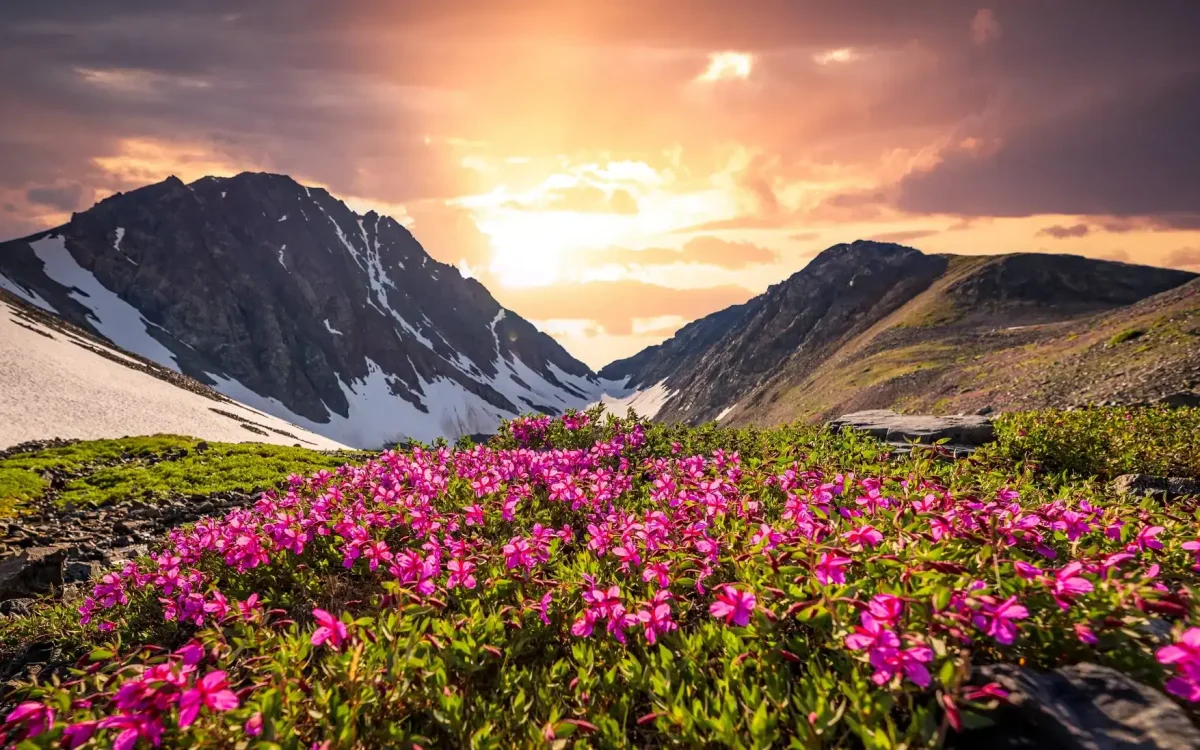
The trekking season in the Valley of Flowers is from July to September, and the nature of the valley is changing with the months. If you are planning an Uttarakhand trek outside the monsoon months, the Kuari Pass Trek offers a different experience through alpine meadows, forests and high mountain landscapes.
July: Fresh vegetation, start of flowering, and active monsoon.
August: One of the best times to view the valley, and it can be quite rainy.
September: The season is ending, with cooler weather.
The ideal month is actually determined by your needs for this trek. Flowers and greenery are important features, and the middle of the flowering season may be a good time to view. Later dates might be more ideal if you're looking for a different weather and scenery mix.
Why is the Valley of Flowers special?
The main attraction of this hike is the scenery.
The Valley of Flowers is not one summit or one viewpoint; it's a constantly changing environment. Forest paths soar up to open meadows, waterfalls cascade down the path, clouds float across the mountains, and the valley floor is dotted with colorful alpine flowers.
It is far from a traditional hike up and down the mountain but rather a stroll through a natural Himalayan garden.
It is one of the most sought-after experiences in the Himalayas in Uttarakhand due to its biodiversity, scenery, and relatively easy trekking. If you enjoy Himalayan meadows and wide-open mountain landscapes, you can also explore the Ali Bedni Bugyal Trek in Uttarakhand.
Some of the most frequently asked questions about the Valley of Flowers July trek:
Is it possible to do the Valley of Flowers trek in July?
Yes. It's a popular summer month to visit, as it's when the main flowering and monsoon season starts. Trekkers should be warned, however, that rain and slippery trails are a possibility.
Is it rainy in July in the Valley of Flowers?
Yes, it rains in Uttarakhand during the monsoon in July. Bring waterproof clothes, a backpack, and electronic protection.
Is the Valley of Flowers trek difficult?
The hike is of medium difficulty. No technical climbing skills are required; however, long walking days, altitude, and uneven terrain will require reasonable fitness.
What is an adequate number of days for Valley of Flowers?
The entire trip takes about 5-7 days, depending on the starting place, the mode of transport, and whether you wish to visit Hemkund Sahib or not.
Is it possible for beginners to trek in the Valley of Flowers?
Yes. The hike is suitable for beginners who are relatively fit. Physical preparation is advised, especially in the case of limited experience of long-distance walking.
Which is the best month in the Valley of Flowers?
The trekking season is mainly in July, August, and September. July is lush with greenery and is the start of the flowering season; later months may provide a more advanced flowering scene and better weather conditions.
Is there any Hemkund Sahib in the Valley of Flowers trek?
Not necessarily. Ghangaria, however, is also an excursion from Hemkund Sahib, which is also a popular inclusion in the Valley of Flowers tour packages.
Final Thoughts
The Valley of Flowers trek is a whole new side to the Himalayas in July. Trails are not covered in snow, and mountains are not arid, but they are instead blanketed in green meadows and seasonal flowers, waterfalls, mist, and dramatic monsoon scenery.
July also has some problems! Trails can get slippery if it rains, and sometimes the weather can suddenly change, and travel conditions may not always be predictable. If you are well-prepared and have the right gear, these conditions are what make trekking experiences unique!
Valley of Flowers is a trekker's dream destination if you are in search of a trek that wraps up with natural beauty, alpine flowers, and an immersive experience in the mountains without technical climbing.