


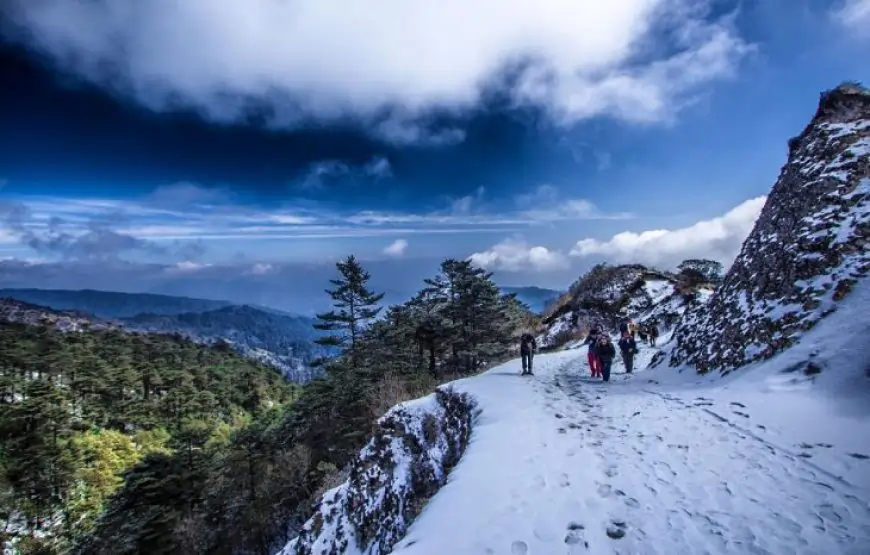
Clear mountain views start with picking the right month. The best time for the Sandakphu Trek falls in February without question. The summit sits at 3,636 meters on the West Bengal and Nepal border. Sandakphu holds the title of the highest peak in West Bengal. No other month gives you a better shot at the full Himalayan range, which is why many choose the Sandakphu Trek in winter.
Why February Stands Out
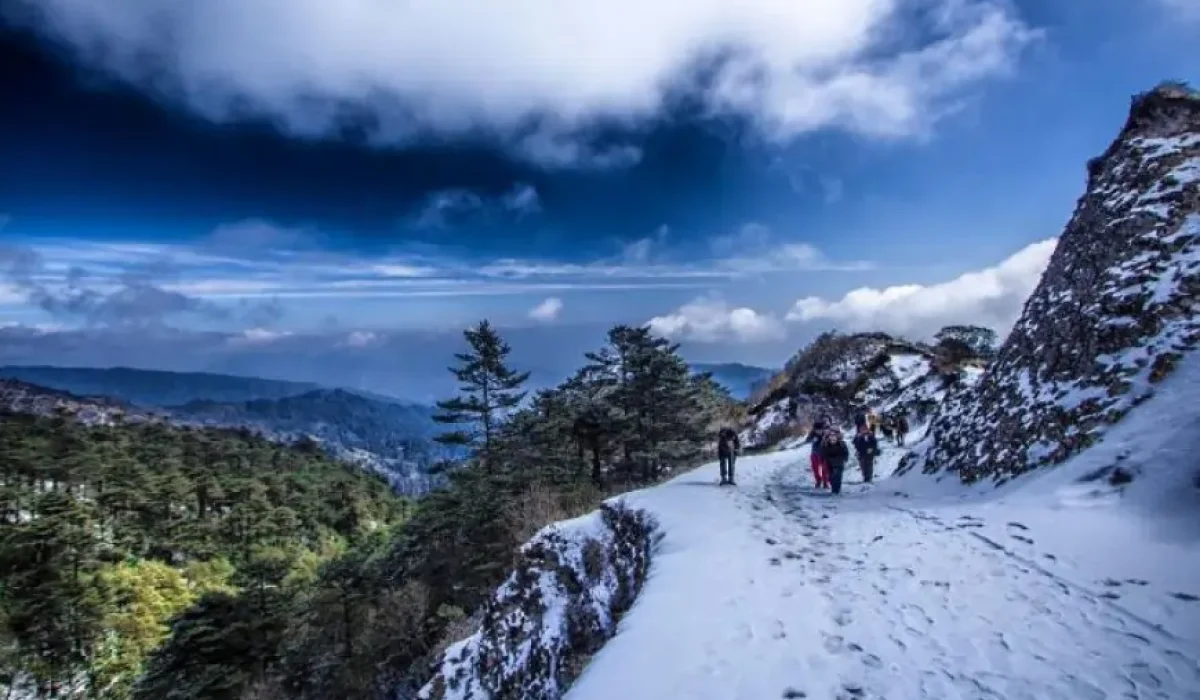
The Sandakphu Trek trail changes its feel with every passing month. February stands above the rest for one clear reason — open skies. Winter sweeps the summer haze out of the air completely. Spring dust has not yet built up along the horizon line. The sky stays wide, clean, and sharp from morning to evening.
A clear February morning puts four of the world’s top five peaks in view. Everest, Kangchenjunga, Lhotse, and Makalu all show up from the summit during the Sandakphu Trek. That kind of clear sky does not come easy anywhere else on Earth. February air stays dry and holds steady pressure from the east. Dry air and steady pressure keep the sky clean and sharp all day.
The Sleeping Buddha: Nature’s Most Iconic Silhouette
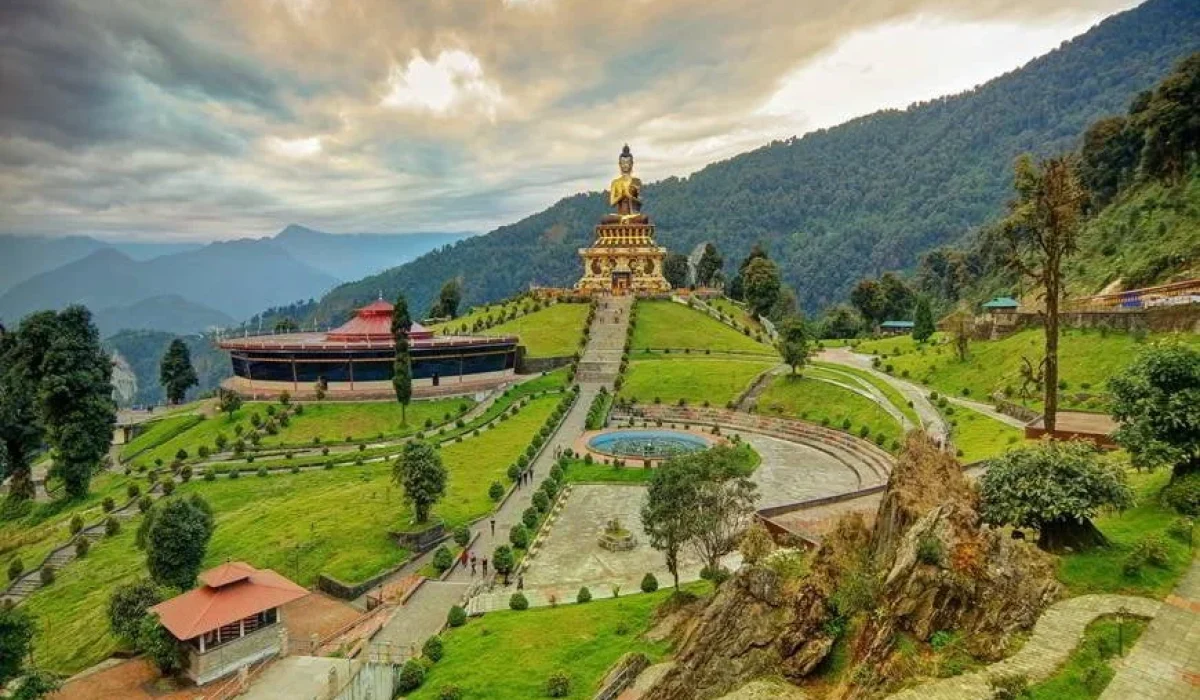
The Sleeping Buddha draws more attention than any other sight on the Sandakphu Trek route. Kangchenjunga and its close peaks form this well-known ridge shape. Stand at the right spot, and the skyline takes on a human outline. That outline shows a large, calm figure stretched flat across the sky.
February mornings arrive crisp, and the days hold clear light from start to finish. The low winter sun sends long shadows across every ridge on the trail. Those shadows sharpen the lines of the silhouette with strong contrast. Trekkers who hit the summit at golden hour on the Sandakphu Trek say the view stays with them.
A Word of Caution: Be Prepared for the Cold
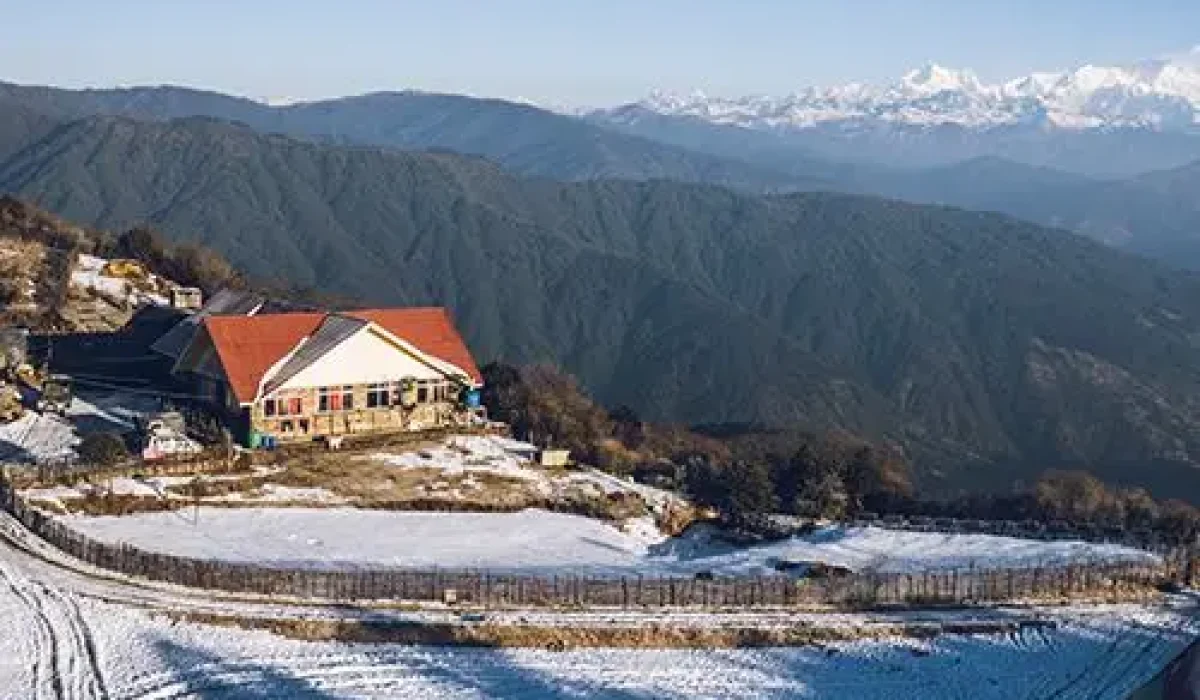
February on the Sandakphu Trek asks for full prep and complete respect. The views pay off, but the cold hits hard and fast. Summit temps at night fall to minus 10 degrees or below. Wind chill pulls the felt temp down even further after sunset. Strong wind gusts strike the open ridge sections with full force.
Good layers keep you safe and warm on this trail. A thermal base layer goes on first, then an insulated mid-layer. A wind and rain shell goes on top as your last line. Wool socks, gloves, a balaclava, and insulated boots are all non-negotiable. Ridge wind stays strong and does not ease off for long. Stepping out without solid gear puts the whole Sandakphu Trek at risk.
Practical Tips for Your February Trek
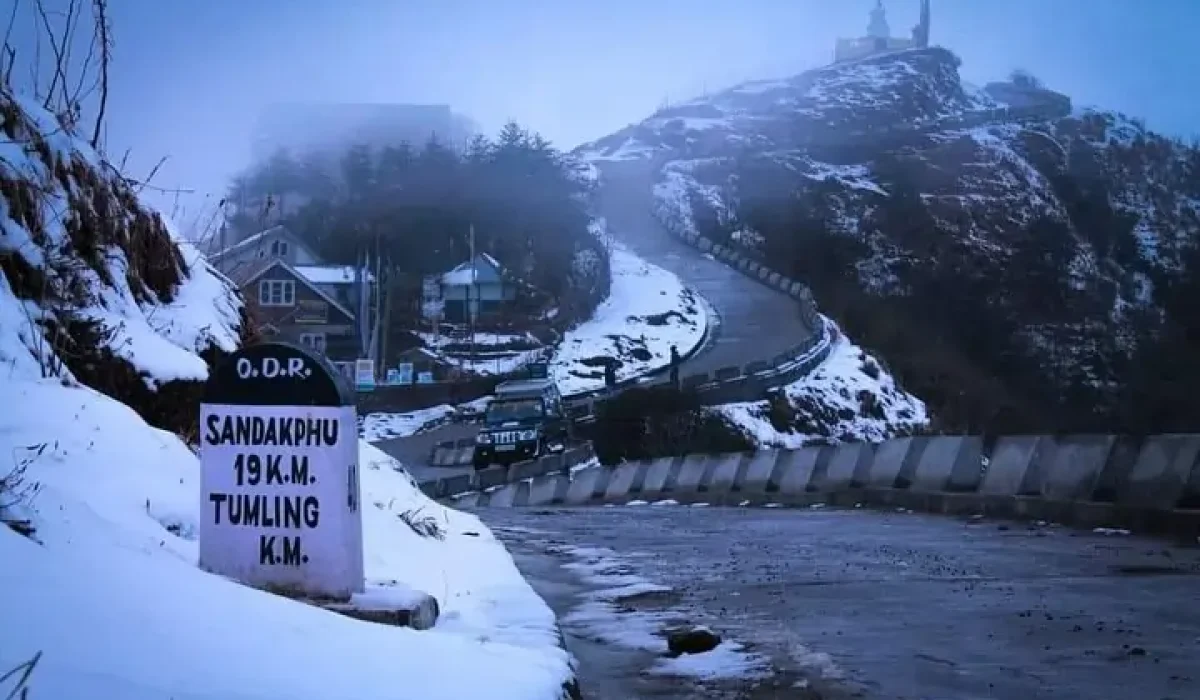
Sandakphu Trek’s best time prep starts at Manebhanjan, close to Darjeeling. The town sits 26 km from Darjeeling and is simple to get to. The route cuts through Singalila National Park, and a permit is required. Four to five days cover the full trail at a steady pace. Trekkers with strong legs and prior trail time finish it in three.
Huts and small teahouses line the trail and serve as rest stops on the Sandakphu Trek. These places are bare-bones, so pack a sub-zero-rated sleeping bag. February light fades fast, so darkness comes sooner than you expect. Set your daily distance so you reach your stop before the sun drops. That one habit keeps every day on the trail safe and smooth.
February is the best time for sharp, wide, and clear peak views on the Sandakphu Trek. The air carries no haze, and every summit stands out in full detail. The Sleeping Buddha silhouette hits its sharpest form in winter light. The land around you takes on a calm, still, and clean kind of look. Go in prepared for cold and wind, and the trek delivers every step of the way.