

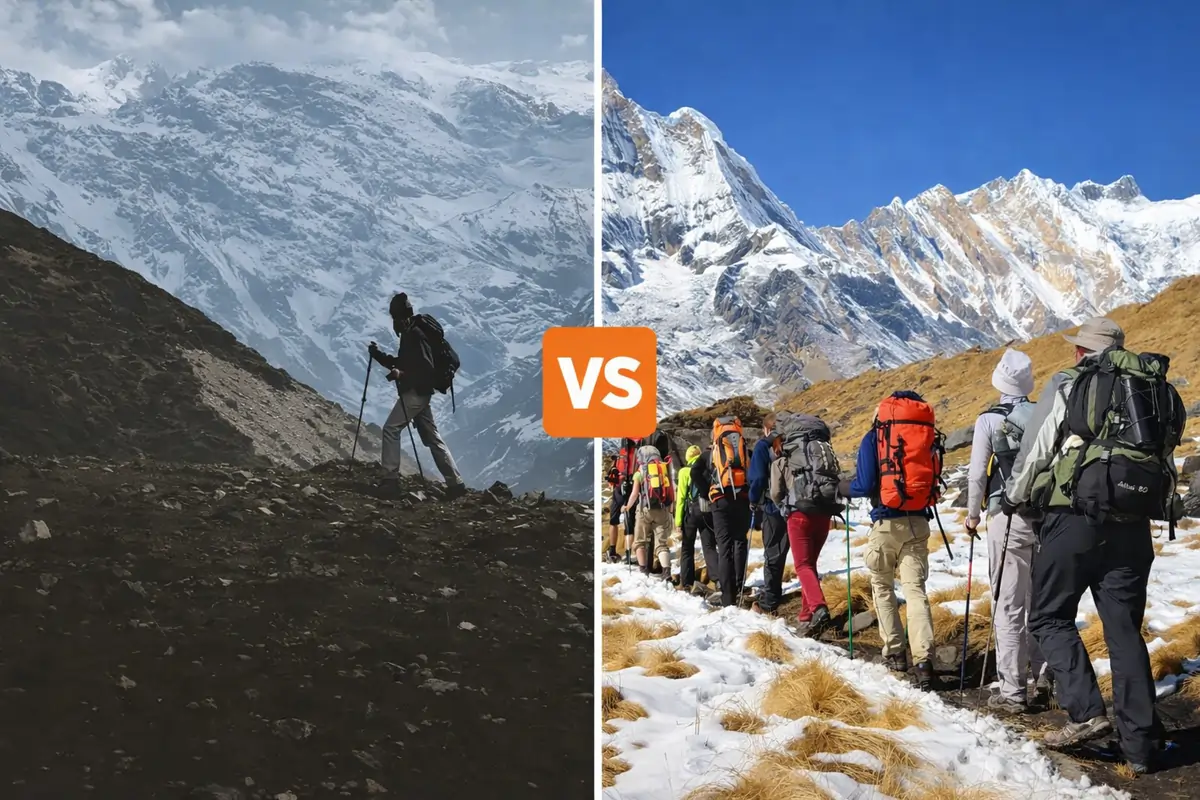

Picking between Solo Trekking and group packages ranks as your first major choice. Both paths offer their own perks, draws, and tests to face. Knowing what each method gives you leads to the best pick overall. This choice should match your trek aims and who you are.
Freedom and Flexibility
Solo Trekking hands you full command of your whole trip ahead. You pick when to begin, where to pause, and rest times too. Plans shift fast based on sky moods or your body’s feel. This free style builds a trip that fits only your speed. Your likes shape every choice you make along the way.
Group deals stick to set times and paths laid out before. This cuts your free rein but drops the load of choosing nonstop. You just arrive and walk the route they planned for all. Most hikers find this calm and simple to follow through.
Safety Considerations
Safety stands as a key point when you weigh these two paths. Group treks bring safety built right in through people and skilled leads. Help comes fast if you get hurt, feel sick, or face odd events. Leads know the land, sky shifts, and how to act when things go wrong.
Solo Trekking puts all the safety weight squarely on your own back. You need sharp map skills, wild aid know-how, and crisis control ability. Far zones hold real risks when you walk them on your own. Hard routes with wild skies make these risks grow even more.
Social Experience
Group deals form easy ways to meet folks and share your time. You grow close with other hikers through hard parts, meals, and fire talks. These bonds often last well past the trek and go beyond views. Shared moments build links that stay with you for years ahead.
Solo Trekking brings quiet space and deep thought time for you alone. You feel nature with no noise and find peace in group walks. Yet being alone grows hard on long treks, mostly when night falls. Those quiet hours can weigh on your mind after days alone.
Cost Comparison
Money parts shift quite a bit when you look at both choices. Group deals cost more up front since they pack in leads and stays. They add permits, food, and rides all in one bill you pay. Yet split costs for these parts tend to save more cash overall.
Solo Trekking looks like it costs less since you skip the package price. But solo buys for permits, rides, and rooms can pile up fast. You lose the low rates that tour firms get from local shops. These small fees grow into large sums when you add them all.
Skill Requirements
Solo Trekking requires a high skill set and past trek experience. You need to read maps well, know wild survival facts, and stay fit. Your mind must cope with being far from others for days straight. New hikers find solo trips too hard and risky to try first.
Group trekking deals greet hikers of all skill types with open arms wide. Skilled leads give tips, aid, and kind words throughout the whole walk. This opens hard treks to those just starting who want safe growth. Leads help push your edge while keeping real risks at bay.
Making Your Decision
Weigh your past trek time, funds, and what you seek from this trip. Pick Solo Trekking if you love being free, own the right skills, and want alone time. Go with group deals if you put safety first, like meeting new folks, or just begun trekking. Each path serves a different type of person with different needs.
Most seasoned hikers say to start with group deals to learn the right ways first. Build your nerve through these safe trips with leads at your side. Your skills rise with each trek you take and finish well. Then shift to solo walks on known paths or easier routes you trust.
Your best pick rests fully on what you like, can do, and aim for. Both Solo Trekking and group deals give rich trips that change you deeply. They shift how you view wild lands and who you are inside.
0 Comment